
Bare Metal vs Virtual Machines: Picking the Right Engine for Your Workload
When architects, engineers, and CTOs debate infrastructure, the conversation often narrows to one crisp question: do you want raw, unmediated hardware, or a flexible layer of virtualization that makes hardware behave like software? Bare metal servers and virtual machines (VMs) represent two distinct philosophies about how computing resources should be provisioned, managed, and consumed. One promises uncompromised performance and predictable behavior; the other promises agility, rapid provisioning, and operational conveniences that feel like magic. This article walks through the trade-offs in practical, decision-ready terms so you can match the right platform to your technical needs and business goals.
Raw Power: Why Bare Metal Still Commands Respect
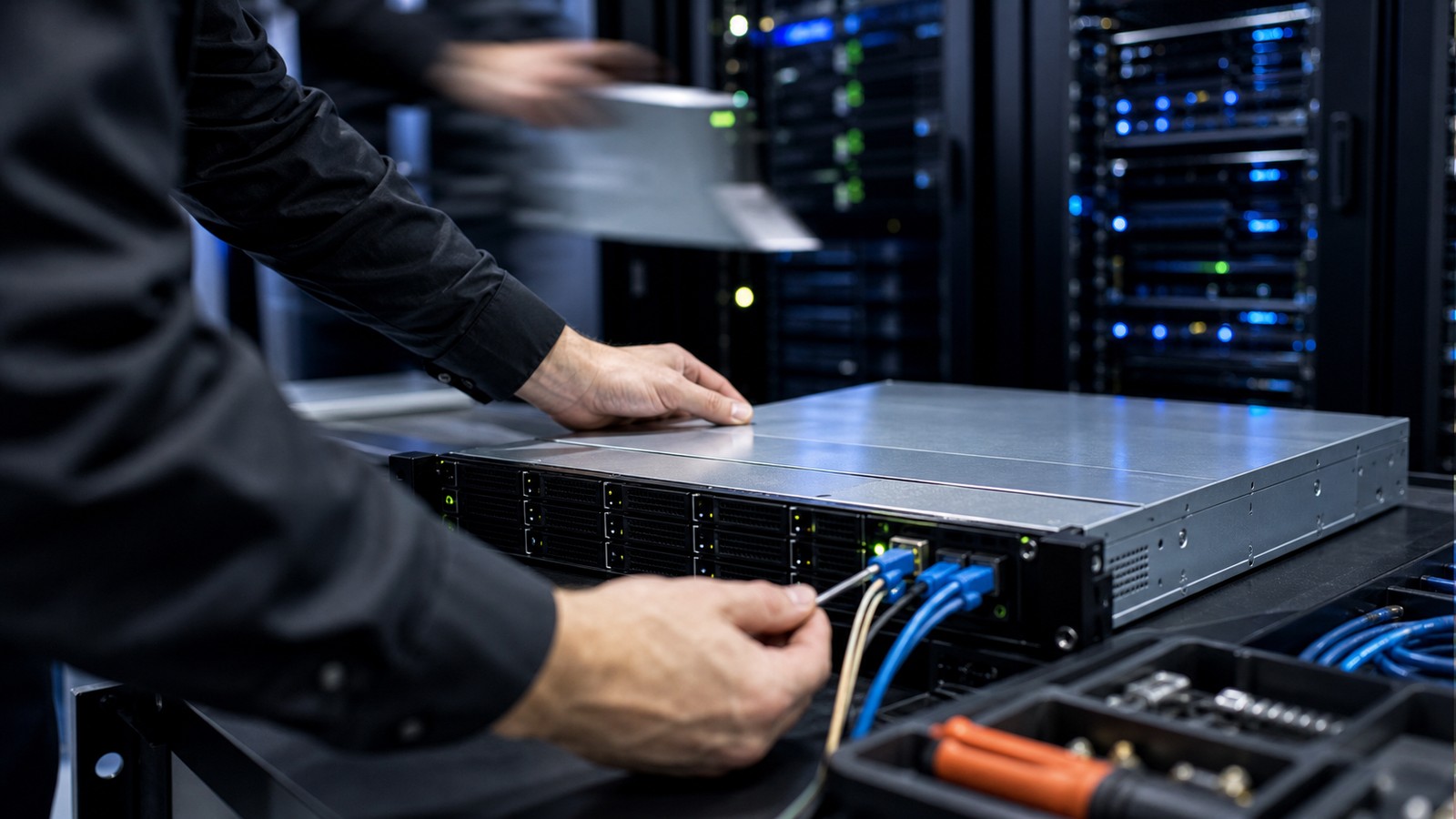
Bare metal means what it says—the operating system runs directly on physical hardware without a host hypervisor mediating every instruction. That elimination of an intermediary translates into performance gains you’ll notice in real-world workloads. High-frequency trading, scientific computing, GPU-accelerated machine learning, and large-scale databases often demand consistent, low-latency I/O and predictable CPU behavior. On bare metal you avoid hypervisor overhead, get full access to CPU features, and can squeeze every microsecond of latency out of the stack.
Beyond latency, bare metal also offers better performance isolation for noisy-neighbor scenarios. In a multi-tenant virtualized environment, co-located workloads can contend for caches, memory bandwidth, or the network, causing unpredictable degradation. When you own the machine, you control the entire hardware stack: memory configuration, NUMA alignment, BIOS settings, firmware versions, and direct-attached storage. That degree of control matters when tuning databases like Cassandra or systems that require deterministic throughput. For certain workloads—render farms, big-data analytics, or when you need GPU passthrough for machine learning—bare metal can be the difference between “works” and “performs excellently.”
Finally, bare metal can simplify licensing and troubleshooting. Some enterprise software binds licenses to physical hardware or expects a deterministic environment; others behave oddly under nested virtualization. Debugging low-level hardware issues is often easier when the system isn’t mediated by an abstraction that adds layers of complexity.
The Chameleon Effect: Virtual Machines and Their Operational Magic
Virtual machines abstract hardware into software-defined instances, creating sandboxed environments that behave like independent machines. The appeal is immediate: instant provisioning from templates, snapshots for rapid rollback, easy cloning, and the flexibility to run multiple disparate operating systems on a single host. Virtualization democratized infrastructure—what used to require rackspace and hands-on provisioning became scriptable, replicable, and accessible to teams of all sizes.
Hypervisors—Type 1 (bare-metal hypervisors like ESXi or Xen) and Type 2 (hosted hypervisors like VirtualBox)—enable VMs to share a physical server while remaining isolated. That isolation is powerful for multi-tenant architectures, testing patches in production-like environments, and maintaining strict separation between dev, test, and prod. VMs also simplify disaster recovery: snapshots and image-based backups reduce RTOs, and live migration lets you evacuate workloads from underperforming hardware without downtime.
The cloud’s rise magnified these benefits. Public cloud providers sell virtual machines as a commodity: you pick CPU, memory, disk, and network profile, and a machine appears within minutes. Autoscaling, load balancing, and cost models tied to resource consumption make VMs ideal for variable workloads. For teams focused on speed of delivery and operational efficiency, virtualization is the Swiss Army knife of infrastructure.
The Money Conversation: Cost, Utilization, and Business Trade-Offs
Cost is never purely about sticker price; it’s about utilization, operational overhead, and total cost of ownership. Bare metal often appears cheaper on paper when you measure raw dollars per CPU per month for high-utilization workloads. If you can saturate machines and keep utilization high for sustained periods, owning dedicated hardware lowers unit costs. Capital expenditures and negotiation leverage for long-term commitments can also drive savings.
But bare metal has operational costs: physical hosting, rack management, firmware updates, spare inventory, decommissioning old hardware, and the human capital required to maintain all of it. Virtual machines, especially in public clouds, shift some of that burden to the provider and convert capital expenses into operating expenses. Pay-as-you-go pricing aligns costs to demand; you only pay for what you provision. This model is ideal for bursty traffic, development environments, and startups that prioritize agility.
Hybrid models complicate the financial picture in interesting ways. Reserved instances, committed-use discounts, and spot instances provide cloud customers with levers to reduce costs. Conversely, bare metal providers now offer on-demand metal and bare-metal-as-a-service options, blurring the lines between ownership and flexibility. When making a cost decision, examine utilization forecasts, provisioning velocity needs, and the value of engineering time. Sometimes paying a premium for virtual machines makes sense because it buys developer productivity and faster time-to-market; sometimes bare metal’s efficiency outweighs those gains.
Security and Compliance: Where Isolation and Governance Meet Reality
Security conversations often start with isolation, and both approaches offer different threat models. VMs provide strong logical isolation through hypervisors, and modern hypervisors have matured to minimize escape vectors. Snapshotting, image immutability, and quick rollback capability make it easier to respond to incidents. Virtualized environments also enable network micro-segmentation and policy-driven security models that reduce lateral movement risk.
On the other hand, multi-tenancy increases the attack surface. Side-channel attacks, misconfigured hypervisors, or vulnerabilities in shared drivers can expose tenants to risk. For workloads governed by strict regulatory regimes—financial services, healthcare, government—dedicated hardware can reduce compliance complexity. Some audits and certifications are easier to pass with single-tenant, physically isolated systems because the evidence trail is simpler and the attack surface narrower.
But security is not binary. Strong operational hygiene—patching, least-privilege access controls, encryption at rest and in transit—mitigates many risks in both environments. Providers now offer bespoke options like dedicated hosts, confidential VMs with hardware-based memory encryption, and private networks that replicate many benefits of bare metal with the agility of virtualization. The right answer depends on your risk tolerance, compliance requirements, and the sophistication of your security operations.
Operational Reality: Provisioning, Management, and the Human Factor
Day-to-day operations are where the theoretical pros and cons collide with human workflows. Virtual machines shine when you need to spin up environments quickly for CI/CD pipelines, ephemeral test beds, or developer sandboxes. Automating VM provisioning with infrastructure-as-code tools reduces error-prone manual steps, and image repositories let teams keep consistent, audited configurations. VMs map well to modern DevOps practices—immutable infrastructure, blue-green deployments, and canary releases—and they integrate seamlessly with orchestration, monitoring, and logging systems.
Bare metal demands more careful orchestration. Provisioning a physical server is slower and often involves hardware lifecycle tasks. But once provisioned, stable physical machines can simplify debugging and tuning. Organizations that manage large clusters of bare metal typically invest in robust automation platforms that handle firmware updates, remote KVM access, out-of-band management, and detailed inventory. For companies with the maturity to build that tooling, bare metal can be highly resilient and cost-effective.
Maintenance windows feel different too. Virtual machines allow rolling upgrades and live migration to minimize service disruption. On bare metal, maintenance often requires more deliberate planning or fault-tolerant architectures to tolerate brief outages. For teams that must minimize downtime at any cost, virtualization provides more operational levers. Conversely, teams aiming for maximum performance per dollar sometimes find the extra planning well worth the results.
The Middle Path: Hybrid Architectures and Emerging Alternatives
One of the most pragmatic trends in infrastructure design is accepting that “either/or” is rarely the right answer. Hybrid approaches combine bare metal and virtualized resources, matching each workload to the most appropriate substrate. Latency-sensitive databases might live on dedicated servers while web tiers and ephemeral workloads run on VMs. Private clouds and bare-metal-as-a-service offerings aim to give enterprises both control and agility.
Containers add another layer to the decision matrix. Where VMs virtualize hardware, containers virtualize the operating system, enabling ultra-lightweight, fast-starting instances that are ideal for microservices. Many organizations run containers on top of VMs for an extra layer of multi-tenancy and stability, while others run containers directly on bare metal to maximize density and minimize overhead. Emerging technologies—unikernels, serverless runtimes, and confidential computing—promise to shift the balance further, offering new options for performance, security, and developer experience.
Decision Framework: How to Choose Between Bare Metal and Virtual Machines
Choosing is less about ideology and more about mapping technical requirements to business outcomes. Start by cataloging workload characteristics: peak and sustained CPU needs, I/O patterns, latency sensitivity, and dependency on specialized hardware (GPUs, FPGAs, NVMe-oF). Evaluate operational priorities: do you need fast provisioning, immutable infrastructure, or full hardware control? Factor in compliance and security constraints, forecasting for cost and growth, and the organization’s ability to manage physical infrastructure.
If your application demands predictable, low-latency performance and custom hardware tuning, bare metal is often the better fit. If you need speed of delivery, multi-tenancy, and cost elasticity, virtual machines offer the operational advantages that accelerate development. For many teams, the smartest path is hybrid—keep mission-critical, performance-sensitive workloads on dedicated hardware and run everything else in virtualized or cloud-native environments. Layer in automation, robust monitoring, and clear governance to avoid the operational complexity hybrids can introduce.
The Bottom Line: Match the Tool to the Task
The debate between bare metal and virtual machines is not a contest with a single winner. Both paradigms have evolved and borrowed strengths from one another: virtualization performance has improved, bare-metal services are becoming more accessible, and cloud providers now offer dedicated hardware and confidential computing that was unheard of a few years ago. The best infrastructure strategy starts with honest requirements analysis and follows with a pragmatic mix of technologies.
Think of it as choosing the right vehicle for each journey. Sometimes you need a race car—low-level tuning, every ounce of performance squeezed out of the engine. Other times you need a fleet of rental SUVs—flexible, easy to scale, and ready at a moment’s notice. Design systems that allow you to use both, and you’ll build an infrastructure that’s fast, resilient, and aligned to what your business actually needs.
Top 10 Best Bare Metal Server Reviews
Explore Hosting Street’s Top 10 Best Bare Metal Server Reviews! Dive into our comprehensive analysis of the leading hosting services, complete with a detailed side-by-side comparison chart to help you choose the perfect hosting for your website.