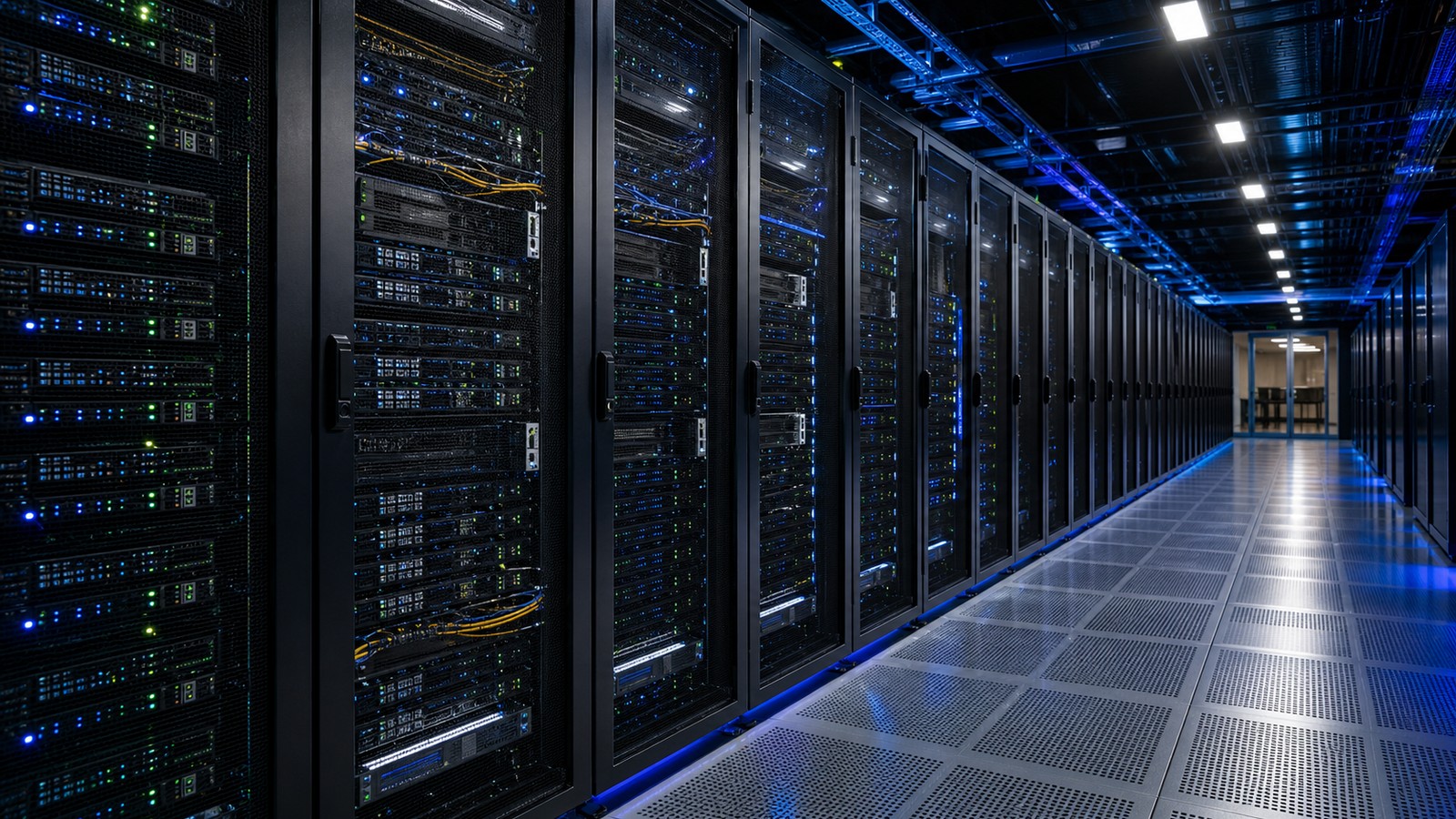

The Direct Path to Power
When people talk about raw speed in computing, they usually mean more than just high benchmark numbers. They mean consistent, low-latency responses under real load, predictable throughput during maintenance tasks, and hardware behavior that doesn’t change from one hour to the next. That is the promise of a bare metal server. Unlike a virtual machine that shares a host with other tenants and routes every operation through a hypervisor, bare metal is a single-tenant physical machine dedicated to your workload. There is no intermediary scheduler, no noisy neighbor, and no hidden resource contention. Your code talks almost directly to the silicon, and the silicon answers with minimal translation. That architectural simplicity—application, operating system, hardware—removes layers of jitter and makes performance not only higher, but repeatable.
CPU and Cache: Every Cycle Counts
A modern CPU is a small ecosystem of cores, caches, and power states orchestrated to deliver speed without wasting energy. In multi-tenant environments, a hypervisor slices those resources so multiple guests can share a single physical host. It works brilliantly for flexibility, but the slicing introduces variability: cores are time-sliced, cache residency fluctuates, and power-management decisions weigh the demands of several virtual machines at once. On a bare metal server, all of that complexity collapses into a single purpose—your workload. You own the package’s thermal budget, the core schedules, the last-level cache, and the turbo headroom. That means hot code paths stay hot, rather than being cooled by a neighbor’s sudden batch job.
This is where CPU affinity and topology awareness pay off. Many high-performance applications pin threads to specific cores to reduce context switches and keep data close to the execution units that need it. With bare metal, these mappings are durable. You can align critical threads with the cores that share cache, keep background tasks away from your main path, and turn off services that would otherwise steal cycles. Power profiles in the firmware—favoring maximum performance over balanced savings—are yours to choose, and they actually take effect, because nothing sits between the operating system and the hardware arbitration. Even subtle optimizations, like isolating interrupt-handling cores to keep them from interfering with compute threads, move from “nice in theory” to “measurable in production.”
NUMA (non-uniform memory access) is another area where bare metal unlocks performance. Multi-socket servers have distinct memory banks attached to each CPU socket, and cross-socket memory access is slower. On shared hosts, the hypervisor’s placement and migrations can blur these boundaries. On your own machine, you can shape them. Pin a process to a NUMA node, bind its memory allocations to the same node, and watch your tail latency tighten as cross-socket chatter disappears. These little wins accumulate: fewer cache misses, fewer context switches, fewer cross-node jumps. The end result is not merely higher throughput, but the kind of consistent throughput that architects can build SLOs around.
Memory Bandwidth and Locality: Feeding the Beast
CPUs crave data, and if memory can’t deliver it fast enough, even the best core stalls. Bare metal servers let you maximize memory bandwidth and minimize stall-inducing surprises. Start with the obvious: all channels are yours. When a control plane provisions a virtual instance, it may present an abstracted memory layout that hides which physical channels are hotter, but on bare metal you can configure the DIMM population to saturate every lane. With DDR5 and ECC modules installed to the vendor’s recommended topology, the server reaches its rated bandwidth and does so predictably.
Locality is the real prize. In-memory databases, caches, real-time analytics engines, and recommendation systems all benefit when hot data remains close to the cores that consume it. On bare metal, memory placement policies are not best-effort guidelines— they are laws. You can ensure that a process’s pages live in the same NUMA node as its threads, that background compaction threads run on the far socket, and that page migration is disabled for the hottest allocations. Even garbage collectors behave better when they are not chasing objects across nodes. Combine these with huge pages to reduce TLB pressure and the result is a quieter memory subsystem that feeds cores steadily rather than in bursts.
There’s also error behavior. ECC memory corrects single-bit errors and flags larger ones, but the way a platform reports and reacts to errors varies. On your own hardware, with direct access to machine check logs and telemetry, you can detect a flaky DIMM before it becomes a cascade of retries. You can schedule swaps proactively, align maintenance with business cycles, and avoid the latent performance hits caused by an ailing component. It’s a small operational advantage that directly supports maximum performance: fewer hidden degradations, fewer emergency windows, and more time running at peak.
Storage at NVMe Speeds: From IOPS to Tail Latency
Storage is where maximum performance becomes most visible to customers. Fast cold starts, quick writes during surges, reliable checkpointing during heavy compaction—these are the stories that delight users and keep on-call engineers sleeping. Bare metal servers allow storage to operate at the speeds the hardware was designed for because there is no virtualization layer translating rich I/O semantics into generic operations. With direct access to NVMe devices, you can set queue depths that match your workload, choose I/O schedulers suited to your access patterns, and configure RAID or ZFS exactly the way your data store expects.
For write-heavy databases and log-structured merge trees, flush behavior defines reliability. If fsync is actually hitting a controller with a supercapacitor-backed cache, you can trust durability guarantees without adding unnecessary delays. If you prefer end-to-end checksumming and copy-on-write with ZFS, you can tune record sizes, log devices, and caching behavior without worrying that an underlying hypervisor will coalesce requests in surprising ways. The upshot is not just higher IOPS, but tighter p95 and p99 latencies—the tails that users feel and SLAs measure. A spike in write amplification during compaction no longer collides with another tenant’s backup job because there are no other tenants.
Maintenance tasks stop being frightening. Scrubs, rebuilds, snapshots, and index builds each consume I/O, but on a dedicated server you can schedule them when they will hurt least and throttle them precisely. You can read SMART data to forecast failures and replace drives before they drift. You can even separate intent logs and hot datasets across devices based on their endurance ratings. Maximum performance is not only about headline numbers; it is about the ability to operate at those numbers day after day without tail blowups, and storage tuned on bare metal is the surest way to get there.
Low-Jitter Networking: Packets on Time, Every Time
Applications increasingly live on the network boundary: microservices fighting for microseconds between RPCs, multiplayer games distributing state to thousands of clients, stream processors shuttling messages in real time. In these settings, average latency is far less important than jitter. Bare metal servers deliver low-jitter networking by cutting out the extra hops and context between the NIC and your stack. Features like SR-IOV and device passthrough let network queues map directly into guest memory with minimal host involvement, and because you are the only guest, those queues remain yours alone.
With that foundation, kernel bypass technologies such as DPDK or io_uring-based stacks can reduce overhead further, handing packets to user space without the overhead of general-purpose network paths. Even if you stay within the kernel’s standard network stack, careful tuning of ring sizes, interrupt coalescing, and RSS (receive-side scaling) can stabilize packet flows. On a shared host, such tuning is a negotiation with neighboring workloads and a hypervisor’s policy. On your own server, it is simply configuration. The result is RPC latencies that stack cleanly: each hop adds a small, consistent cost rather than an unpredictable pause.
Deterministic networking also depends on time. Distributed systems need accurate clocks for ordering events, expiring leases, and coordinating leaders. Bare metal gives you freedom to use PTP (Precision Time Protocol) with hardware timestamping if your application demands it. That precision keeps clusters coherent and prevents the subtle drift-induced errors that degrade performance in complex ways. At larger scales, you can segment traffic onto dedicated VLANs or physical fabrics so that storage replication doesn’t elbow API calls out of the fast lane. The theme is the same: control the path, remove the variability, and the network becomes a transparent conduit rather than a source of mystery.
Kernel, BIOS, and Tuning: Turning Dials that Actually Move the Needle
The last step from “fast” to “maximum” is hands-on tuning, and it is only worthwhile when your changes survive contact with reality. Bare metal is where tuning sticks. Begin at the firmware. Choose performance-oriented power profiles to reduce C-state residency and keep cores awake for latency-sensitive threads. Confirm that memory runs at rated speeds and that inter-socket links are configured at full width. Disable devices you do not use to simplify interrupt maps and reduce surprise wakes. Map interrupts for hot NIC queues to specific cores and keep those cores free of general-purpose work. If your workload hates context switches, isolate a set of cores entirely and let the OS schedule everything else around them.
In the operating system, apply the parameters that reflect your application’s shape rather than folklore. If your service uses large, long-lived heaps, huge pages can shrink page table overhead and reduce TLB misses. If it streams many small packets, coalescing settings should favor responsiveness over maximum throughput. Filesystem and I/O scheduler choices should match your access patterns: log-structured systems prefer one set of defaults, metadata-heavy ones prefer another. For storage that relies on write barriers for safety, verify barriers are honored end to end with your controller configuration. Small checks like that prevent spectacular incidents.
Most importantly, instrument everything. Tuning without telemetry is superstition. Export CPU steal time (which should be effectively zero on bare metal), cache-miss rates, NUMA remote-access counters, disk queue depths, NIC drops and retransmits, and tail latency histograms broken out by operation type. When a change helps, you will see the signature across several of these signals; when it harms, you can revert quickly and with confidence. Because bare metal removes extraneous variability, signal-to-noise improves, and honest cause-and-effect emerges. That feedback loop is the real accelerator. It allows teams to learn faster and move from generic best practices to workload-specific excellence.
Where It Shows Up: Databases, AI, Games, and Streaming
Maximum performance is not an abstract virtue; it pays the bills in concrete categories of work. Databases are the classic example. OLTP engines reward low latencies on small writes and predictable flushes during checkpoints. OLAP systems and search clusters thrive on deep NVMe queues and high memory bandwidth during scans and compactions. In both cases, placing the data path on bare metal sharpens tail behavior and lifts usable throughput. You can push closer to theoretical limits because the system you designed is the system that runs—no hypervisor interference, no shared I/O, no surprise neighbor spikes.
AI and machine learning are another showcase. Training large models and running high-throughput inference benefit when GPUs are owned, not borrowed. Bare metal ensures deterministic access to accelerators, PCIe lanes, and cooling capacity. You can select GPU SKUs, set persistence modes, tune clocks within supported envelopes, and wire NCCL or similar libraries to use the fastest links on the board. For storage-heavy pipelines—preprocessing images, streaming video frames, swapping large checkpoints—direct NVMe and tuned filesystems compress wall-clock time and keep expensive GPUs fed. Maximum performance here translates directly into shorter training cycles and more experiments per week, which is a competitive advantage beyond raw speed.
Real-time systems—games, ad-tech bidders, fraud detectors, voice and video platforms—extract similar value from bare metal’s determinism. Players feel jitter as rubber-banding. Bidders lose auctions when tails expand. Streaming users churn when buffers underrun. A low-variance platform makes these failures rare and keeps experiences smooth. Even if averages look comparable on paper, the predictability of bare metal often turns into higher effective capacity because you need fewer headroom buffers to cover the worst case. In practical terms: the same hardware does more useful work because it does not pause unpredictably.
Finally, there is the often-overlooked developer velocity. Builds, tests, and staging environments that live on the same class of hardware as production produce trustworthy signals. Flaky tests that occasionally time out on shared infrastructure become stable. CI pipelines complete in consistent windows, making release trains dependable. Engineers spend less time chasing ghosts and more time building features. Maximum performance includes human performance, and bare metal’s steadiness pays dividends there as well.
The Payoff: Sustaining Peak Without Fear
Sustaining maximum performance is about engineering habits more than heroics. Bare metal servers invite those habits by making cause and effect visible. When you can see the hardware, you can measure the right things and automate the right responses. Standardize a small set of server SKUs so bottlenecks are reproducible. Keep racks and cabling patterns consistent so latency and throughput numbers mean the same thing from one row to the next. Treat firmware like code: stage, test, roll out with canaries, and monitor carefully. Segregate management networks and rotate credentials. Practice swapping drives and reseating cards with your provider’s remote hands so 3 a.m. hardware events are routine rather than dramatic.
Do the same for software. Bake golden images that boot into a known-good configuration with observability agents running from minute one. Keep configuration drift at zero with idempotent tooling. Record SLOs in operational terms—p95 and p99 latencies for the user-visible actions that matter, recovery times for the failure modes you actually see—and align every tuning decision to those outcomes. Because bare metal minimizes external variability, progress shows up clearly, and teams develop the calm confidence that comes from watching small improvements stick.
Maximum performance has a cost: attention. But on a dedicated machine, that attention is well spent. You are not fighting the platform. You are building on top of it. For organizations whose revenue depends on low-latency decisions, high-throughput data paths, or expensive accelerators kept at full utilization, that trade is worth making. Bare metal servers transform performance from an aspiration into a property of the system—visible, tunable, and reliable. When the path from your code to the hardware is short and stable, everything else gets easier: faster software, cleaner operations, and users who notice that things just work.
Top 10 Best Bare Metal Server Reviews
Explore Hosting Street’s Top 10 Best Bare Metal Server Reviews! Dive into our comprehensive analysis of the leading hosting services, complete with a detailed side-by-side comparison chart to help you choose the perfect hosting for your website.