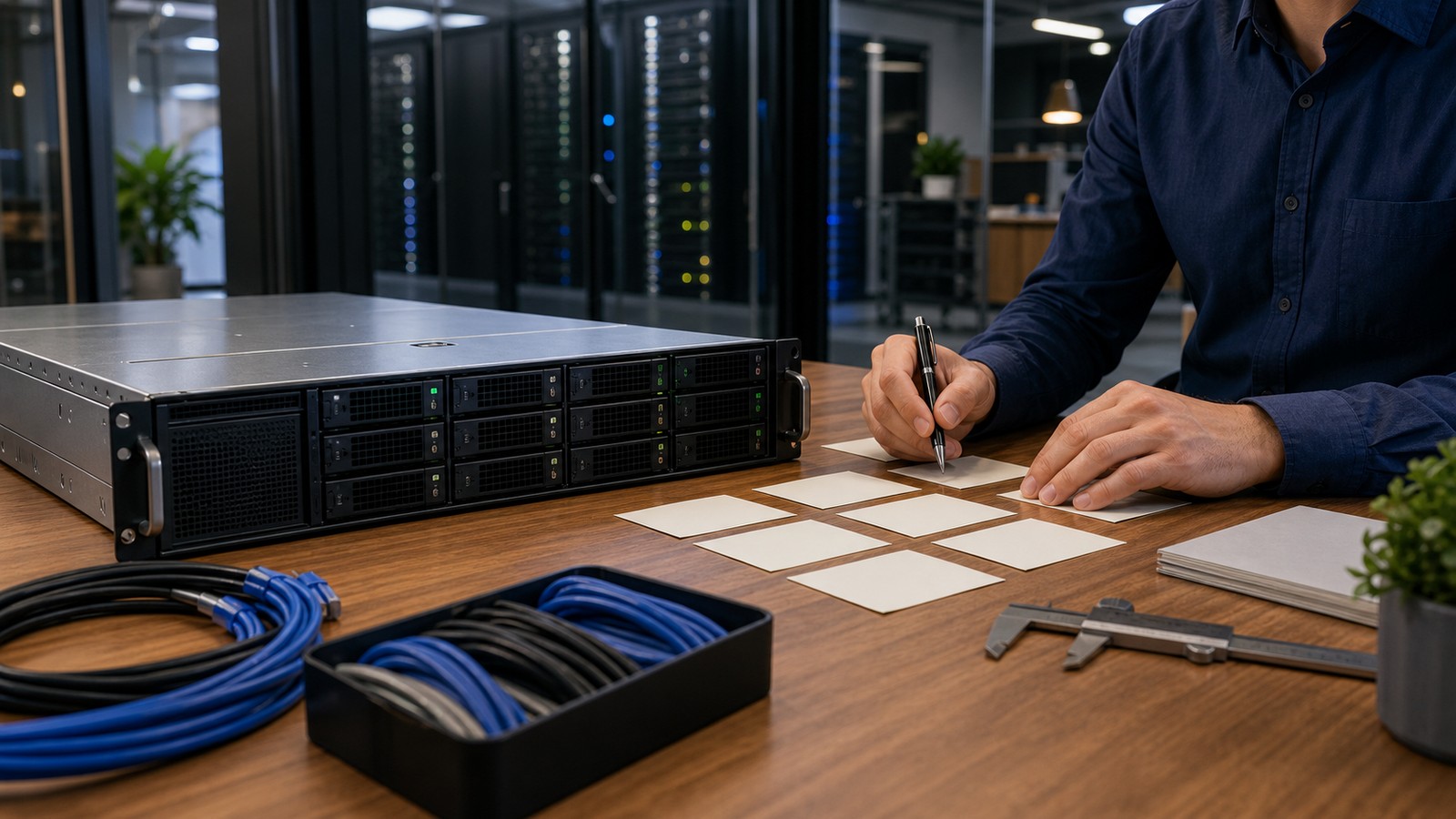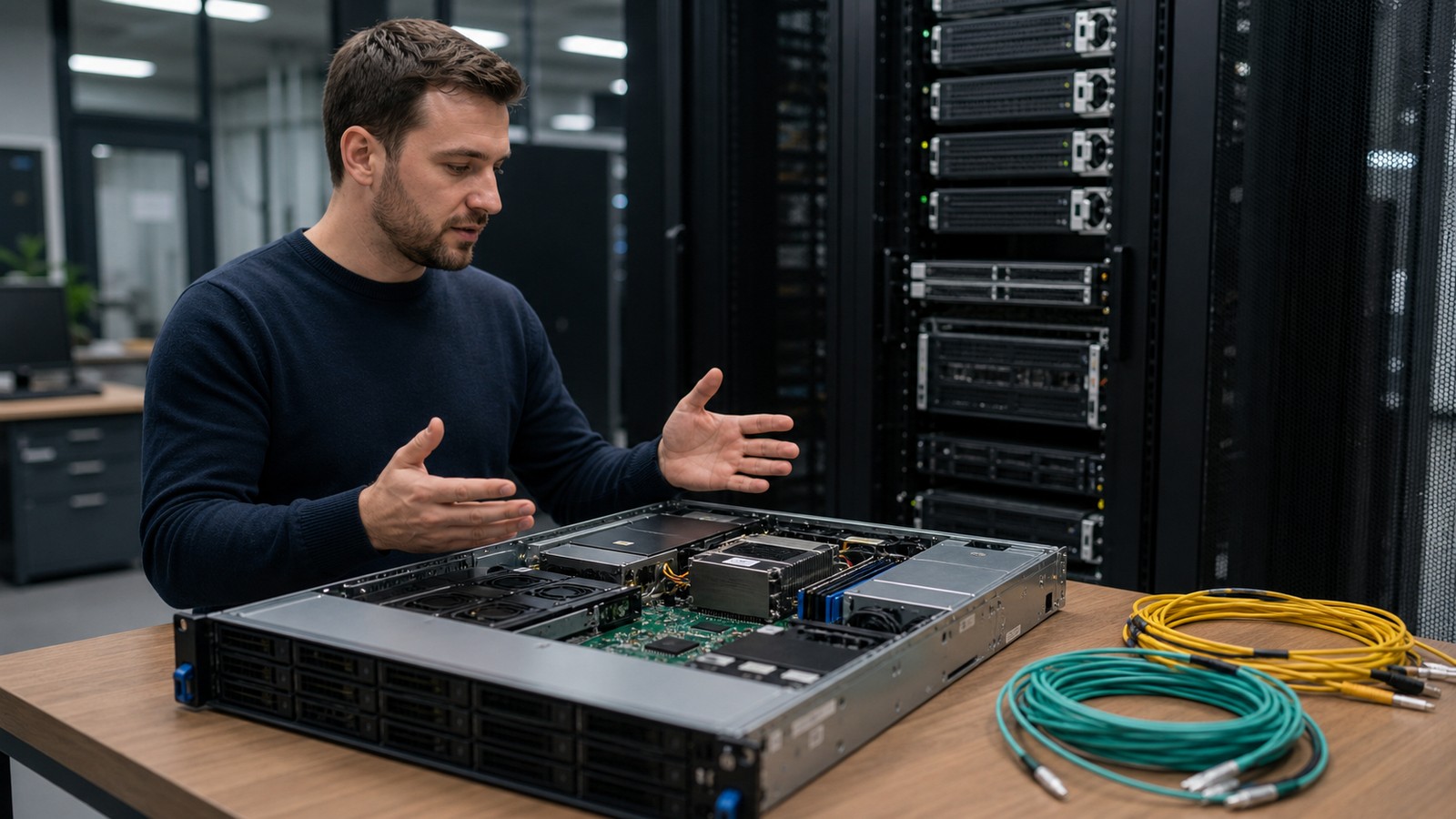

The Moment Bare Metal Makes Sense
Every infrastructure decision is a bet on your future. You choose a platform, write a pile of code that assumes certain guarantees, and ship features into the wild. Most of the time, general-purpose cloud servers are the easy bet: they appear in minutes, scale elastically, and arrive bundled with a galaxy of managed services. But there are moments when a different foundation wins by a mile. Those are the moments for a bare metal server—a physical, single-tenant machine that gives your application a direct line to CPU, memory, storage, and network without a hypervisor in the path.
Performance You Can Feel: Latency, Throughput, and Consistency
Performance is the headline reason to choose bare metal. The difference isn’t an abstract benchmark number; it shows up in the texture of your system under real load. Without a hypervisor, your processes reach the hardware with fewer layers of scheduling and emulation. CPU cores aren’t time-sliced among neighbors, turbo behavior is steadier, and last-level cache is yours alone. For services that live or die at the tail—ad-tech bidders, multiplayer game state, low-latency trading logic, high-frequency messaging—the result is not just faster averages but tighter p95s and p99s, which is where user experience and SLAs are actually decided.
Memory behavior follows suit. When you control the whole box, you can align threads and allocations with the system’s NUMA topology, reduce cross-socket chatter, and keep hot data close to the cores that need it. In Monte Carlo engines, recommendation systems, or in-memory OLAP stores, those micro-optimizations add up to very real throughput. Perhaps more important, they remain steady as traffic rises because you aren’t competing with invisible neighbors whose spikes collide with yours.
Storage is where bare metal can feel transformative. Direct access to NVMe drives and full control over RAID or ZFS configurations means you tune queue depths, schedulers, and sync semantics to match your workload instead of accepting whatever abstraction the virtualized platform decides is “good enough.” Write-heavy databases can flush safely at hardware speed, time-series systems can ingest without jitter, and compactions or index builds happen on your schedule without combative I/O translation layers. Even maintenance windows change character; you can plan around known device behavior instead of hoping an underlying host won’t introduce surprise latency.
Networking completes the picture. With dedicated NICs and technologies like SR-IOV, packets bypass much of the virtualization tax, which reduces jitter and tightens latency. If you’re building a microservice mesh with chatty services, running real-time streaming, or serving head-to-head matches in a global game, that determinism pays dividends. The essence of the performance argument is predictability: bare metal doesn’t just go fast, it goes fast the same way every time, and your architecture can rely on that.
Where the Data Lives: Storage, IOPS, and Gravity
Data-intensive applications often announce their needs in two ways: they demand steady high IOPS or they refuse to move. If your system spends its life pushing blocks to disk, scanning large columnar files, or compacting log-structured storage engines, the direct device access of a bare metal server gives you both headroom and confidence. You can choose enterprise NVMe with known endurance characteristics, set redundancy with the exact RAID level or ZFS profile you trust, and observe real SMART data to predict failures before they interrupt revenue.
Data gravity changes the economics as volume grows. Moving terabytes between zones, regions, or providers is slow and expensive, and that friction pushes compute toward where the data sits. Bare metal lets you co-locate storage and compute with low, stable latency inside a rack or row so analytics engines, search clusters, and training pipelines run close to the bits they chew. In systems where nightly jobs turn into hourly jobs and then into continuous processing, keeping the data home base on dedicated hardware eliminates an entire class of unknowns.
The same argument applies to disaster recovery and backups. When you control the storage fabric, you decide how snapshots are taken, replicated, and verified. You can schedule scrubs and rebuilds around business cycles, set explicit throughput ceilings to protect foreground traffic, and test failovers without negotiating with a multi-tenant platform’s maintenance calendar. Nothing about this is glamorous, but it’s exactly the sort of gravity-bound detail that determines whether a page at 2 a.m. is a five-minute blip or an all-hands incident.
Compliance and Isolation Without the Guesswork
Security and compliance are rarely about a single feature; they’re about clean boundaries that auditors can understand and operators can enforce. Bare metal servers provide a simple boundary: one tenant, one machine. That physical isolation removes a swath of co-residency risk and makes certain attestations easier. You can map data flows across racks and rooms, pin sensitive workloads to specific facilities, and document that no unrelated tenants share hardware with your regulated systems.
Control is the other half of the story. With bare metal, you decide when to patch kernels and firmware, which hardening baselines to apply, how out-of-band management is segmented, and where encryption keys live. You can keep base images lean, disable unused device paths, and enforce network policies that would be awkward in a multi-tenant stack. For many organizations in finance, healthcare, and the public sector, that control aligns more naturally with internal policies and reduces the number of exceptions and compensating controls that accumulate over time.
None of this implies that bare metal is automatically more secure. Misconfigurations travel just as quickly when you have full privileges. The point is that the model is easier to reason about. If your risk register is filled with concerns about shared infrastructure, side-channel research, opaque host maintenance, or data residency, a bare metal footprint gives you the levers to address those items with clarity instead of creative paperwork.
The Cost Curve: Predictability for Always-On Workloads
Cost arguments fall apart when they start with sticker prices. The right comparison is cost per unit of useful work at the reliability and latency you need. For steady-state, resource-intensive systems—databases that never sleep, hot caches, render farms that churn all month, analytics jobs that run continuously—bare metal servers often deliver more work per dollar because there’s no virtualization tax and no need to overprovision to outrun noisy neighbors. Pricing is usually fixed monthly or term-based, which simplifies forecasting and removes the surprise line items that creep into variable bills.
Where cloud servers excel is elasticity. If your usage looks like a heartbeat, paying by the minute is a superpower. If your marketing events are spiky, if your batch jobs can be opportunistic, or if your early-stage product doubles traffic every few weeks, elastic infrastructure turns waste into a non-issue. That elasticity is valuable enough that for many workloads it overwhelms any raw performance win you might get on a bare metal server.
The pragmatic approach is to sort your estate by duty cycle. Components that run close to one hundred percent of the time and consume a lot of CPU, memory, or I/O are prime candidates for bare metal because you can keep the machines busy and amortize their cost. Components that scale in bursts or sit idle for long stretches are better in the cloud where you only pay when they work. Blending the two yields a cost profile that is both stable and flexible, a combination your finance team will appreciate.
Hands on the Metal: GPUs, NICs, and Kernel-Level Control
Sometimes the deciding factor isn’t abstract performance or cost but a very specific hardware need. If you train large models, run accelerated inference, or process massive image and video pipelines, GPUs are the heart of your platform and you care about exactly which cards you get, how they’re cooled, and how they’re wired. Bare metal servers let you pin those GPUs to a job without asking a hypervisor for permission, and they give you direct control over drivers, firmware, and low-level runtime settings.
The same goes for specialized networking. Whether you’re using SR-IOV for near-bare-metal packet paths, leveraging DPDK for user-space fast paths, or deploying programmable SmartNICs, the tight control pays off in throughput and latency you can engineer around. Even on the CPU side, bare metal exposes BIOS toggles and power profiles that affect turbo behavior and memory timings in ways impossible to reach on a generic virtual instance.
Kernel-level control matters too. If your team tunes sysctls, hand-picks I/O schedulers, or compiles custom modules, those efforts resonate more on dedicated hardware because nothing fights you underneath. That doesn’t mean you should indulge every tweak; it means the tweaks that matter can actually land, and you can trust they’ll persist without a host platform quietly changing the rules midflight.
Are You Ready? Team Maturity and Day-Two Reality
The least glamorous but most decisive factor in choosing bare metal is operational maturity. Day one—provisioning a server and installing an operating system—is easy. Day two is forever. You will need standard images, idempotent configuration management, robust monitoring that includes hardware health, and a practice of treating servers as cattle rather than pets. Firmware updates must be tested and scheduled, not done ad hoc. Out-of-band management interfaces must live on isolated networks with strong access control. Runbooks and remote-hands procedures should be written before you need them.
If this sounds heavy, remember that modern tooling eases the load. You can automate imaging with Packer, drive provisioning with iPXE and unattended installers, converge machines with Ansible or another configuration manager, and stand up observability pipelines that make failures routine rather than dramatic. Container orchestration sits comfortably on bare metal too, bringing declarative deployments and rolling updates to machines that happen to be physical instead of virtual. The key is to be honest about the work and to staff it. Bare metal pays off when you own it deliberately; it punishes teams who treat it like an invisible cloud.
There’s also a cultural element. Teams that thrive on craftsmanship—curious about BIOS settings, deliberate with filesystems, picky about network queues—often get disproportionate mileage from bare metal because they notice and exploit the details. Teams that want to move at high velocity with minimal operational surface may prefer to spend their energy on product features and let a provider run more of the stack. Neither posture is wrong; each matches different goals and stages of company life.
Your Next Step: A Simple Bake-Off to Decide
The most reliable way to choose is to test your own workloads, not someone else’s benchmark. Pick a representative service that captures your pain points. If latency tails are the problem, choose a read path with strict SLOs. If write throughput hurts, pick the database under compaction. If training speed is the bottleneck, select a model and dataset that reflect production scale. Build two small environments: one on cloud servers that are tuned for your needs, and one on bare metal servers that mirror the shape you’d actually deploy.
Run the same experiments on both. Warm up caches, then push sustained load. Measure not only averages but p95s and p99s. Trigger failovers and node replacements to see how long recovery takes and how much attention it demands from an engineer. Track cost per unit of useful work by tying each environment’s bill to throughput at your target latency. Note the cognitive load—how many dashboards you watched, how many knobs you had to turn, how many surprises appeared.
Once you have data, the decision often makes itself. If bare metal yields dramatically steadier tails, higher usable throughput, and simpler operations at a predictable monthly cost, the case is strong. If the cloud environment keeps pace while offering on-demand scale and a lighter operational burden, the elasticity may be worth more than any small performance edge. Many teams find the answer is not a single platform but a portfolio: stateful, always-on systems on bare metal; bursty, stateless tiers in the cloud; and connective tissue that stitches the two into one coherent platform.
The goal isn’t to pick a winner forever; it’s to match each workload to the environment where it excels and to stay nimble as that answer evolves. Hardware improves, instance types change, and your product will ask for new capabilities you can’t predict today. A small, principled bake-off keeps you honest and stops the decision from being driven by anecdotes.
Final Word: Use Bare Metal When It Lets Your Business Breathe
You should use a bare metal server when your success depends on performance that is not only high but repeatable, when your data is heavy and benefits from living next to compute, when compliance is easier with single-tenant boundaries, when costs stabilize at high utilization, and when specific hardware access moves the needle. You should also be ready to own the day-two work with automation and discipline so that physical infrastructure feels as friendly as code. If that describes your world, bare metal isn’t a nostalgia play; it’s the most modern choice you can make. It gives your software a stable stage, your operators a clean model, and your finance team a bill they can predict. Combined thoughtfully with elastic cloud servers for the parts of your system that spike or roam, it becomes the backbone of a platform that’s fast, resilient, and ready for whatever your roadmap throws at it. That’s the moment bare metal makes sense—when it lets your business breathe easier while running harder.
Top 10 Best Bare Metal Server Reviews
Explore Hosting Street’s Top 10 Best Bare Metal Server Reviews! Dive into our comprehensive analysis of the leading hosting services, complete with a detailed side-by-side comparison chart to help you choose the perfect hosting for your website.