
The Big Picture: What “Bare Metal” Really Means
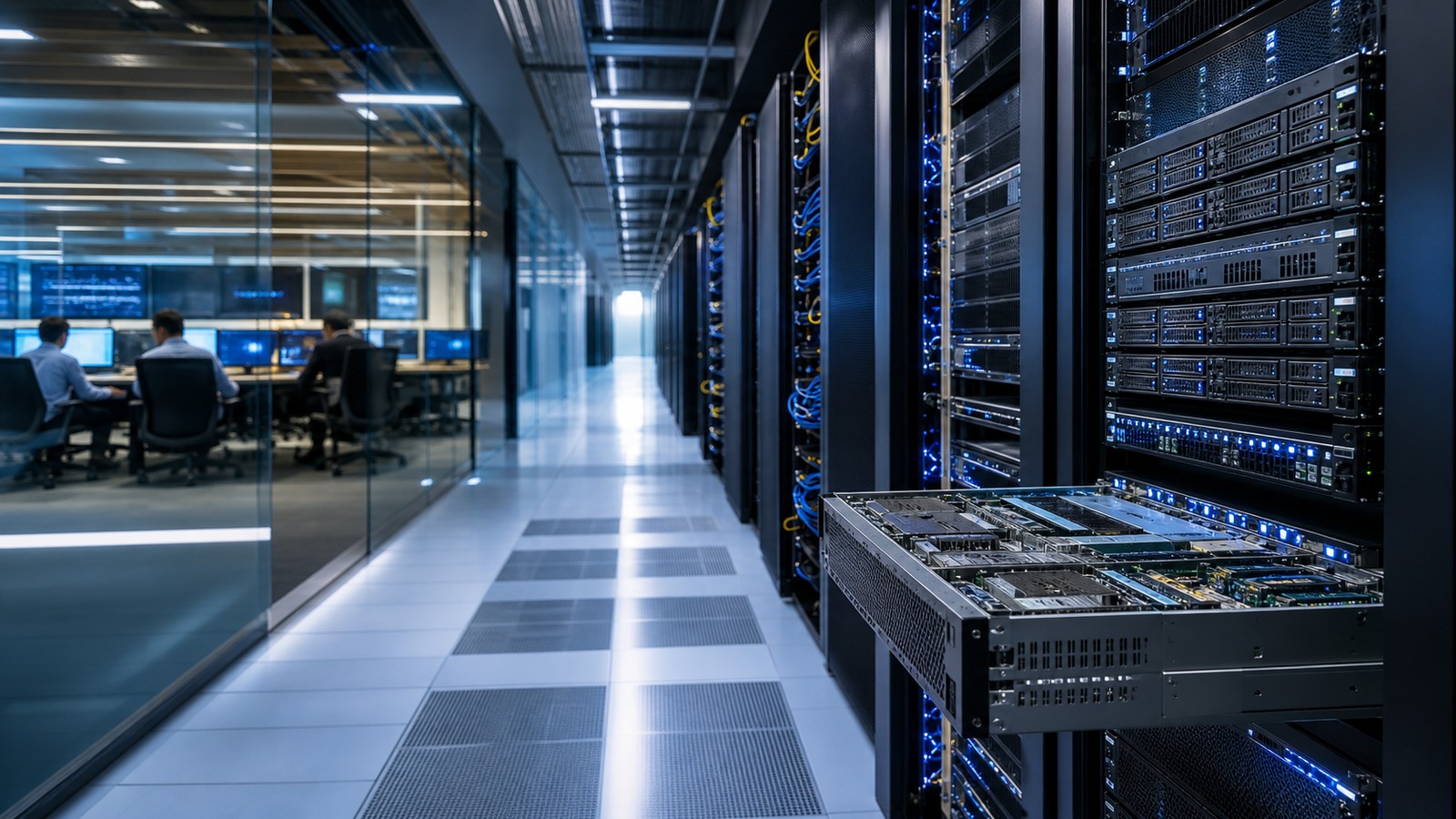
If you’ve ever wondered what powers the internet’s heaviest workloads—massive databases, real-time analytics engines, ad-tech platforms, game servers, or high-frequency trading systems—the answer is often the same: bare metal. A bare metal server is a physical machine dedicated entirely to one customer, with no hypervisor layer dividing resources among multiple tenants. You get the full box: all the CPU cores, all the memory channels, the entire storage backplane, and the network interfaces, with no neighboring workloads to compete with you for performance. In a world that’s grown comfortable with virtual machines and elastic cloud instances, bare metal feels refreshingly direct. It’s the purest form of compute you can rent without installing hardware in your own data center.
That purity has practical consequences. Because there’s no virtualization layer, the path from your application to the hardware is shorter and more predictable. You can pin workloads to specific cores, tune BIOS settings, select the exact storage layout you want, and even take advantage of hardware features—like Intel VT-d, AMD IOMMU, SR-IOV, or NVMe namespaces—without the extra abstractions of a multi-tenant platform. Providers still offer modern conveniences like APIs, fast provisioning, remote KVM access, and automated operating system installs, but the heart of the experience is a single-tenant machine you configure and control.
Virtual, Dedicated, and Bare Metal: Untangling the Options
It helps to place bare metal alongside two familiar models: virtual machines and managed cloud instances. Virtualization uses a hypervisor to carve a single physical server into multiple logical machines. This is efficient for providers, but it introduces a shared environment where noisy neighbors can affect performance and where your workloads must traverse an extra scheduling layer. Managed cloud instances are essentially pre-packaged VMs with elastic billing and strong ecosystem integrations; they’re excellent for general purpose workloads, bursty traffic, and rapid experimentation.
Bare metal stands apart by removing the middleman. There’s no hypervisor between you and the hardware, so your application’s system calls reach the CPU, memory, and storage with minimal overhead. This unlocks consistent latency, higher I/O ceilings, and a level of hardware determinism that’s crucial for stateful systems and latency-sensitive services. At the same time, it demands a bit more operational literacy. You’re responsible for the OS, the kernel tuning, the RAID or ZFS layout, the firewalling, and the monitoring stack. Many providers will offer managed services on top, but the philosophical center of bare metal is control.
There’s also a hybrid pattern—“bare metal in the cloud”—where providers expose physical servers behind cloud APIs. You might spin up a fleet of VMs for stateless web tiers while placing your data stores on bare metal for performance and cost predictability. Or you might run Kubernetes nodes on bare metal to give containers direct access to hardware—great for GPU workloads, local NVMe performance, or reduced virtualization tax. What matters is recognizing the trade-offs and matching them to your workload’s needs.
Performance Without Apologies: Cores, Clocks, and I/O That Actually Deliver
Performance is the headline reason teams choose bare metal, and it shows up across the entire stack. Start with CPUs. When you rent all the cores on a server, you get the full cache hierarchy and turbo behavior with no neighboring guests vying for thermal headroom. NUMA topology is yours to exploit: you can pin processes to sockets, align memory allocations with CPU locality, and shave microseconds from hot paths. For analytics engines and stream processors, those microseconds compound into measurable throughput gains.
Memory is next. Multi-channel DDR5 with ECC delivers not only higher bandwidth but also lower variance, because there’s no hypervisor scheduler coalescing balloon memory or migrating pages between guests. Applications with large in-memory working sets—Redis, Memcached, in-memory OLAP systems, real-time bidding engines—can operate closer to theoretical limits. If you’ve ever benchmarked an in-memory store on a VM only to discover performance cliffing under load, the consistency of bare metal can feel transformative.
Storage is where bare metal often changes the game. Direct access to NVMe SSDs means you control queue depths, namespaces, and RAID or ZFS configurations. For write-heavy databases, you can tune sync behavior with confidence, knowing there’s no virtualization layer translating I/O into opaque operations. Latency tails tighten, predictable flush semantics return, and maintenance tasks—like compactions, scrubs, or snapshots—run at hardware speed. If your workload rides the I/O boundary, bare metal’s lack of neighbors and direct device paths will likely show up as sharper p99s and fewer surprises.
Finally, networking. With SR-IOV or dedicated NICs, packets can bypass hypervisor overhead and hit your stack sooner. Whether you’re stitching together a microservice mesh or delivering multiplayer game state to thousands of clients, that last step of determinism helps. It’s not just about the mean latency; it’s about eliminating jitter so your system behaves the same at 2 a.m. as it does at peak.
Control and Confidence: Security, Isolation, and Compliance
Security on bare metal begins with isolation. Single tenancy removes an entire class of risks tied to co-resident workloads, side-channel leakage, and cross-VM escape vulnerabilities. You’re also in charge of the OS image and the patch cadence, which means you can harden the kernel, strip unused packages, and set up disk encryption according to your own policies. Many organizations find compliance milestones easier with bare metal because audit scopes are narrower and shared responsibility matrices simpler to document.
That said, control cuts both ways. With full root access, misconfigurations can travel quickly. It’s essential to treat your bare metal like code: standardized images, immutable infrastructure patterns, and configuration management ensure every server is born secure and stays that way. Use out-of-band management interfaces—IPMI, iDRAC, iLO, or Redfish—carefully, segment them on their own network, and rotate credentials on a schedule. Full-disk encryption with TPM-backed keys can protect data at rest, and network policies at the top-of-rack switch can enforce a clean separation between application tiers.
In multi-environment organizations, bare metal often accommodates data sovereignty rules more cleanly than multi-tenant platforms. You can choose specific regions or facilities, pin workloads to racks, and maintain consistent hardware inventories for validation. For regulated sectors—finance, healthcare, government—this blend of physical control and operational automation is a powerful combination that aligns with the expectations of auditors and security teams alike.
From Day Zero to Day Two: Provisioning, Automation, and Operability
Modern bare metal isn’t a ticket-driven slog. Providers expose APIs that let you pick a machine profile, load an image, and boot into your OS of choice, often in minutes. You can use PXE or iPXE to chainload custom installers, preseed operating system configurations, and lay down partition schemes exactly as you like. After that first boot, a configuration manager—Ansible, Puppet, Chef, or Salt—can converge the machine into a production-ready role with users, packages, services, and kernel parameters set in a predictable way.
For teams already fluent in Terraform, infrastructure-as-code patterns extend nicely to bare metal. You declare the server shape, the VLANs it should join, the IP assignments, and the storage layout, then let your pipelines do the rest. Image-based workflows add speed and consistency: bake gold images with Packer or similar tools so that every machine comes online with secure defaults and baseline observability agents.
Day-two operations are where bare metal distinguishes mature teams from improvised setups. You’ll want metrics, logs, and traces shipped to a central system from the first minute of life. Hardware telemetry matters too: monitor disk health via SMART, track NIC errors and link flaps, alert on ECC memory events, and keep an eye on temperature and fan curves. Routine firmware updates should be staged and tested like any code change, and remote hands processes with your provider should be documented for when a disk needs swapping or a cable needs reseating at 3 a.m. With these patterns in place, bare metal is not only fast but comfortably operable.
Designing for Scale: Networks, Storage Fabrics, and High Availability
A single server is just the start. Real systems demand redundancy, growth paths, and graceful failure modes. On the network side, think in layers. Put management interfaces on isolated networks, keep storage replication on a dedicated VLAN or physical fabric, and expose public services via load balancers with health checking and TLS termination. Bonded NICs can improve throughput and resiliency, while routing protocols like BGP can provide dynamic failover between upstreams if your provider supports it.
Storage architecture deserves special attention. Local NVMe offers blistering performance, but plan for the day a chassis fails. Replication at the database layer is common, but certain workloads benefit from shared storage pools. Software-defined options—Ceph, Gluster, or ZFS-backed replication—can present durable volumes while letting you keep compute and storage on the same hardware fleet. For latency-sensitive services, collocate replicas within the same rack or row to minimize switch hops. For durability, stretch replicas across rooms or availability zones with independent power and cooling.
High availability on bare metal often feels pleasantly transparent. Because you’re not contending with hidden hypervisor behavior, failover is easier to reason about. Health checks trigger a promotion, DNS or anycast updates direct traffic to healthy nodes, and state replication follows a policy you control. Chaos drills—pulling a drive, yanking a link, simulating a switch failure—help you build muscle memory so you’re calm when something really goes wrong. As your footprint grows, you can standardize on reference architectures: a repeatable rack design, a known switch topology, and a small number of server SKUs streamline procurement and operations.
The Money Question: Cost, Predictability, and When Bare Metal Wins
Total cost of ownership isn’t just about sticker prices; it’s about predictability. Bare metal tends to shine for steady-state, resource-intensive workloads where you expect to use a machine near its capacity for months at a time. Instead of paying a virtualization tax or renting elasticity you don’t need, you commit to a fixed monthly or term-based cost with clear performance characteristics. For databases that rarely scale down, queues that stay hot, or render farms that churn around the clock, bare metal often delivers more work per dollar and fewer surprises on the invoice.
On the other hand, elasticity is where virtualized cloud instances still dominate. If your traffic is spiky, your application footprint is small, or your success depends on spinning up and down thousands of ephemeral workers hourly, the overhead of managing physical servers might not be worth it. Hybrid models are compelling: place your stateful, performance-sensitive components on bare metal and let bursty front ends live on auto-scaled instances. Data egress, storage snapshots, remote hands, and cross-connects also factor into cost models; include them up front so the business case reflects reality.
One underappreciated angle is opportunity cost. When your engineers have to fight unpredictable performance or chase noisy neighbors, velocity suffers. A stable bare metal foundation can make teams faster by removing variability from the feedback loop. Builds complete at consistent speeds, test suites stop flaking, and production behaves like staging because both environments sit on the same class of hardware. That stability compounds—lower on-call fatigue, more confident releases, and fewer defensive over-provisions that quietly drain budgets.
Is Bare Metal Right for You? A Practical Path Forward
Choosing bare metal is less about fashion and more about fit. If your workloads are I/O hungry, latency sensitive, or compliance bound, the odds are good that dedicated hardware will serve you better than a fleet of multi-tenant instances. If you need to squeeze every ounce of performance from GPUs, if you’re building a database platform with strict recovery time objectives, or if your auditors want clearly delineated tenants and data paths, bare metal checks a lot of boxes. Conversely, if your stack is mostly stateless web services and your usage pattern looks like a seismograph, the elasticity of virtualized cloud is hard to beat.
A sensible way to decide is to run a bake-off. Identify one or two representative services, reproduce the data path on both platforms, and measure the things that matter—throughput, tail latency, time-to-recover from a node failure, and cost under realistic load. Keep the experiment honest by applying the same operational rigor you would in production: real observability, production-like data volumes, and a deployment method you can repeat. Don’t just compare average performance; look at worst-case behavior during compactions, backups, or heavy cache churn. What you learn in those edges will tell you more than a synthetic benchmark ever can.
If you decide to proceed, start with a small but complete reference architecture. Pick a provider with the regions you need, select one or two server SKUs that match your profile, and build out a single rack’s worth of capacity with redundant switching and clear network segmentation. Automate the day-zero experience so a machine can go from bare metal to service-ready with a single command. Add robust monitoring and alerting from the first boot. Practice rotating hardware in and out of service so maintenance doesn’t become a production event. As you gain confidence, scale by repeating the pattern, not reinventing it.
The bigger picture is that bare metal is not an ideological stance; it’s a pragmatic tool in your infrastructure toolbox. It delivers uncompromising performance, isolation you can reason about, and costs that make sense for sustained workloads. It rewards teams who value craftsmanship—who care about BIOS settings, tuned kernels, disk layouts, and packet paths—not as ends in themselves, but as levers that make software faster and more reliable. If that sounds like the kind of foundation you want for your systems, bare metal is a worthy place to plant your flag.
Top 10 Best Bare Metal Server Reviews
Explore Hosting Street’s Top 10 Best Bare Metal Server Reviews! Dive into our comprehensive analysis of the leading hosting services, complete with a detailed side-by-side comparison chart to help you choose the perfect hosting for your website.