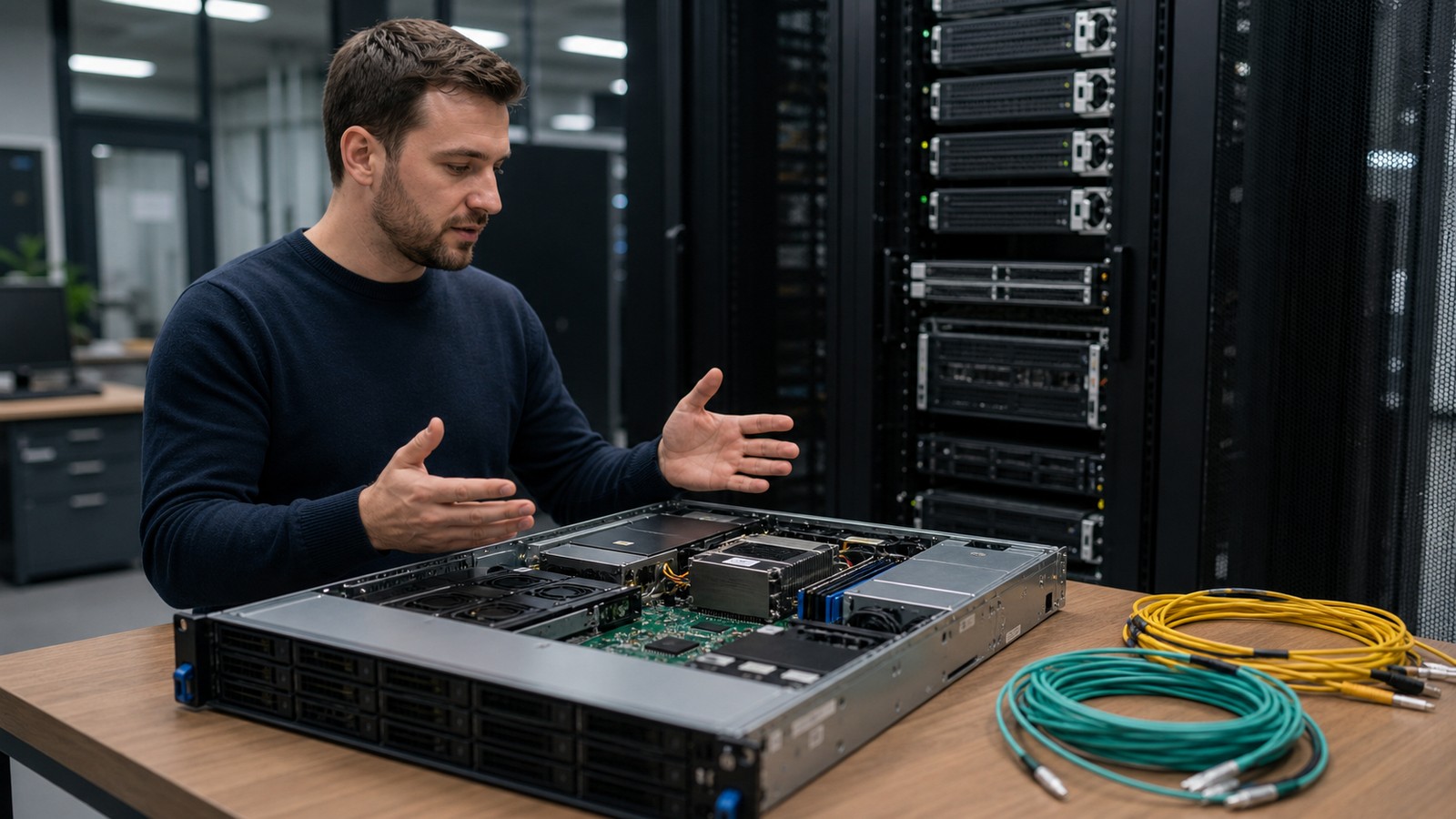

The Case for Bare Metal: A Powerful Beginning
Bare metal servers are simple to describe and hard to ignore in practice: an operating system running directly on physical hardware, unmediated by hypervisors or multi-tenant abstractions. That simplicity is the source of their power. For teams building latency-sensitive applications, large-scale databases, GPU-accelerated workloads, or systems that demand absolute predictability, bare metal servers remain the tried-and-true choice. This article explores the pros and cons of bare metal servers in practical, decision-focused terms, giving you the context to know when dedicated hardware is the right foundation for your systems—and when it is not.
Unmatched Performance: When Every Millisecond Matters
Performance is the headline advantage of bare metal. Without a hypervisor layer, CPU instructions execute without additional context switching or virtualization overhead. That yields lower latency, more deterministic CPU scheduling, and better real-world throughput for I/O-heavy workloads. In use cases like high-frequency trading, real-time bidding, or distributed databases tuned for minimal jitter, those microseconds add up to measurable business value. For GPU workloads—machine learning training, inference at scale, or video rendering—bare metal allows direct access to PCIe lanes and GPU interconnects, enabling maximum data throughput and the best possible utilization of expensive accelerators.
Performance isolation is another key reason teams choose bare metal. In virtualized, multi-tenant environments, noisy neighbors can contend for last-level caches, memory bandwidth, and NIC queues; diagnosing and preventing such interference often requires architectural workarounds. With dedicated servers, you control the entire hardware stack: CPU choice, memory configuration, NUMA settings, BIOS tuning, firmware versions, and storage topology. That degree of control enables deep performance engineering—fine-grained optimizations that squeeze more predictable performance out of every core. When delivering a consistently fast user experience is a primary objective, bare metal can be the simplest route to reliable, high-performance outcomes.
Cost and Utilization: The Economics of Dedicated Hardware
The cost story for bare metal servers is nuanced. On a per-unit basis, raw hardware capacity can be less expensive if you maintain high utilization and long-term workloads. Owning or leasing dedicated servers for steady-state applications—large databases, caching layers, or backend analytics—often yields a lower cost-per-CPU-hour than ephemeral cloud VMs billed by the minute. Providers of bare metal as a service now offer flexible billing models that blur the line between traditional capital expenditure and cloud-style operational expenses, but the core economics remain: the more you can reliably utilize a server, the better the cost efficiency.
That said, bare metal brings additional operational and lifecycle costs. Physical hardware requires provisioning lead time, data center space, power, cooling, spare parts, and personnel to manage firmware, hardware failures, and decommissioning. Those realities translate into human hours and logistics overhead that can erode theoretical savings. In contrast, virtual machines and cloud-native architectures convert hardware ownership into provider-managed services, shifting costs into predictable operational spend and enabling elastic scaling for traffic spikes. For businesses that value developer velocity and want to minimize infrastructure maintenance, the marginal premium for virtualization often pays for itself through faster iteration and reduced ops toil.
Security and Compliance: Built-In Simplicity, Not a Silver Bullet
Security is often cited as a leading reason to choose bare metal. Physical isolation eliminates a class of multi-tenant concerns: hypervisor escapes, shared kernel vulnerabilities, and subtle cross-VM side channels. For industries with stringent regulatory demands—healthcare, finance, government—single-tenant hardware can simplify audit evidence and control boundaries. Physical access controls, dedicated network fabrics, and hardware-based encryption options provide additional layers of defensibility when protecting highly sensitive data.
However, bare metal is not a security panacea. It reduces certain attack surfaces but increases others, principally around hardware lifecycle management. Untended firmware vulnerabilities, misconfigured out-of-band management interfaces, or insecure physical access procedures can create significant risks. The security posture of a bare metal deployment depends on operational discipline: patching firmware and operating systems, rotating credentials, securing BMC/IPMI, and maintaining thorough logging and monitoring. Modern public cloud providers have introduced dedicated host and confidential computing offerings that replicate many of the security benefits of bare metal while preserving cloud agility—underscoring that the right security approach is often a mix of technology and procedure rather than a single architectural choice.
Operations and Management: The Human Side of Infrastructure
Day-to-day operations look and feel different on bare metal. Provisioning a physical server can be a deliberate process: choosing the right SKU, ensuring firmware alignment, installing OS images, and integrating the host into monitoring and orchestration systems. Those steps require planning and often introduce longer lead times than spinning up a VM. On the flip side, once a bare metal host is provisioned and tuned, it can be remarkably stable and easier to diagnose at low levels because there are fewer abstraction layers between an operator and the hardware.
Managing bare metal at scale typically requires investment in automation and tooling. Teams that operate hundreds or thousands of dedicated servers build platforms to automate BIOS configuration, run automated burn-in tests, orchestrate firmware updates, and handle out-of-band management via IPMI or Redfish APIs. The payoff is predictable, high-performance infrastructure that can be managed programmatically. For smaller teams, those tooling investments can be burdensome, making virtual machines and managed services a more pragmatic option. Ultimately, operational maturity and the ability to invest in infrastructure tooling are central considerations when deciding whether to go bare metal.
Ideal Workloads and Use Cases: Where Bare Metal Shines
Bare metal is not a one-size-fits-all answer; it excels in a well-defined set of scenarios. High-performance databases and distributed storage systems benefit from direct access to NVMe and predictable IOPS. Real-time systems—trading platforms, video encoding pipelines, and gaming backends—gain from the reduced latency and deterministic scheduling that dedicated hardware provides. GPU-intensive applications, whether for deep learning model training or large-scale rendering, often require bare metal to achieve optimal throughput and efficient multi-GPU communication.
Beyond raw performance, bare metal is attractive when licenses are tied to physical hardware, or when regulatory frameworks require strict physical isolation. Scientific computing clusters, where cost-effective dense CPU and memory configurations are essential, are also a natural fit. In these contexts, the performance, visibility, and tuning freedom that bare metal offers produce clear operational and financial advantages compared with virtualized alternatives.
Drawbacks and Limitations: What Keeps Teams Up at Night
The benefits of bare metal come with trade-offs. Provisioning cycles and capacity planning become more consequential when hardware is involved; misjudging demand can lead to underutilized racks or capacity shortfalls. Scaling to handle sudden traffic spikes is harder on dedicated infrastructure unless you maintain headroom or leverage hybrid solutions. Troubleshooting hardware failures often involves physical intervention, spare parts inventory, and potential downtime unless you have redundancy baked into the architecture.
There is also a talent consideration. Bare metal environments reward deep systems knowledge: understanding NUMA behavior, kernel tuning, firmware interactions, and storage controller quirks. Organizations that lack that expertise may find themselves paying for it through slower deployments, misconfigurations, and suboptimal performance. Finally, as cloud providers continue to enhance virtualization performance and offer bare-metal-like services, the competitive advantage of going fully dedicated narrows—especially for teams prioritizing agility over micro-optimized performance.
Making the Choice: A Practical Decision Framework
Choosing bare metal servers should be a deliberate, requirements-driven decision rather than an ideological stance. Start by cataloging your workload characteristics: is low latency or predictable I/O essential? Do you require specialized hardware like GPUs or RDMA networking? What are the licensing and compliance constraints? Next, evaluate your operational capabilities: can your team support hardware lifecycle management, or would you prefer to focus scarce engineering time on product features rather than infrastructure plumbing?
Consider a hybrid approach as a practical compromise. Run performance-sensitive services on dedicated hardware while placing development environments, web frontends, and bursty workloads on virtualized platforms in the cloud. Many organizations use bare metal for core database tiers and leverage virtual instances for stateless services, delivery pipelines, and analytics bursts. Factor in economic modeling that includes both direct hardware costs and indirect operational overhead, and make a plan that includes automation to reduce repetitive operational toil. Lastly, build an exit or expansion strategy: can you move parts of the stack to cloud instances if demand changes, or scale into additional bare metal capacity when needed?
Fit for Purpose Infrastructure
Bare metal servers remain a powerful option for organizations that need maximum performance, control, and predictability. They are not the default choice for every workload—virtualization and cloud services offer compelling advantages in flexibility, speed, and operational simplicity—but when performance and isolation matter, bare metal can be the decisive factor that enables success. The smartest infrastructure choices match the technology to the workload, balance cost against operational capacity, and use hybrid models where rigidity would otherwise hamper agility. Choose with a clear understanding of the trade-offs, invest in the tooling and people to manage your choice well, and treat bare metal as one of many tools you can wield to deliver fast, reliable, and cost-effective services.
Top 10 Best Bare Metal Server Reviews
Explore Hosting Street’s Top 10 Best Bare Metal Server Reviews! Dive into our comprehensive analysis of the leading hosting services, complete with a detailed side-by-side comparison chart to help you choose the perfect hosting for your website.