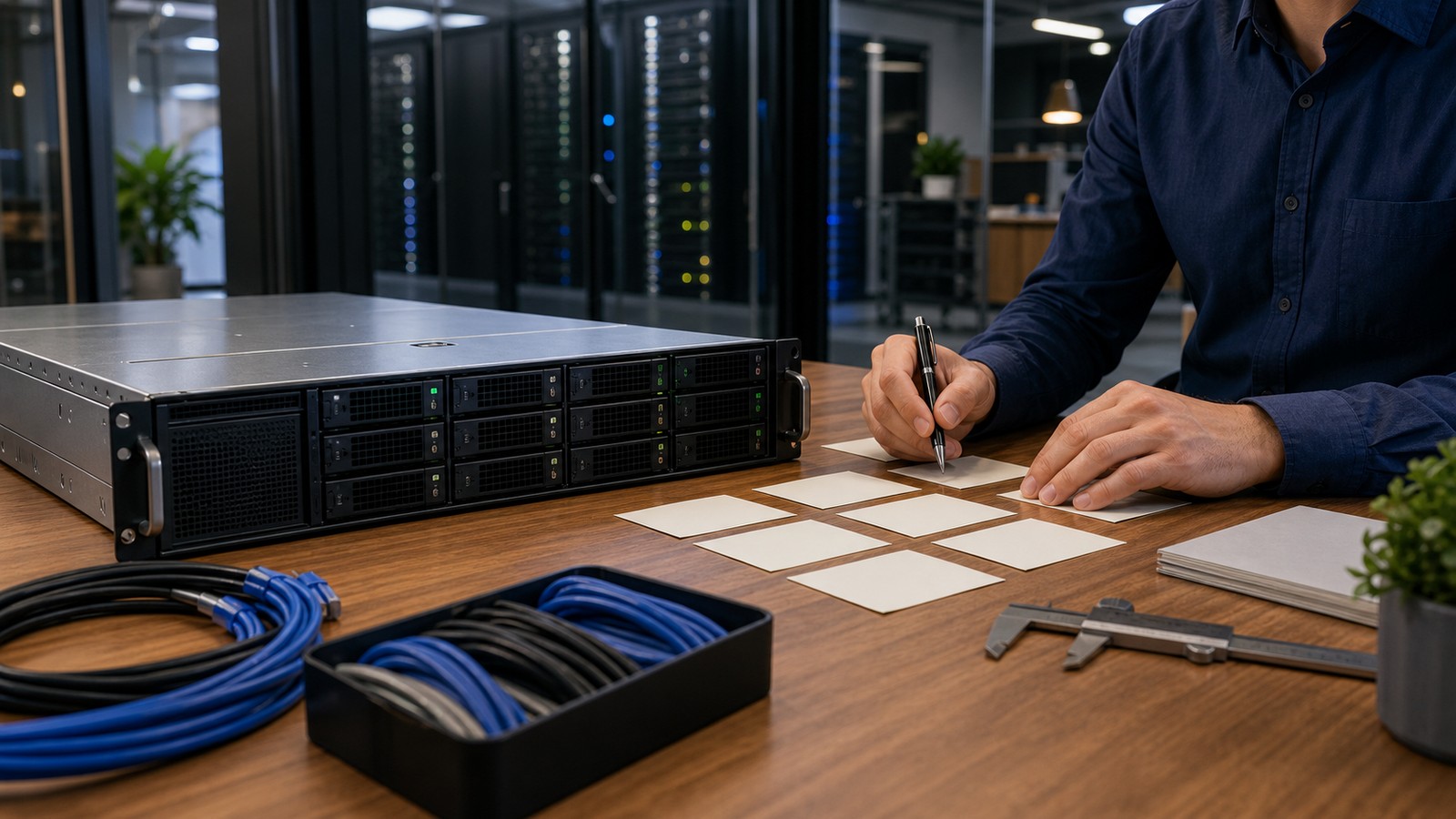

Turbocharge Your Traffic: Picking Bare Metal for High-Traffic Websites
High-traffic websites are unforgiving: sudden surges, complex application stacks, unpredictable cache patterns, and user impatience measured in milliseconds. When performance, predictability, and full-stack control matter most, bare metal servers become a compelling choice. They remove layers of abstraction, expose the hardware to tuning, and give you deterministic behavior that virtualized environments can struggle to match under extreme load. This article walks you through what matters when choosing bare metal servers for sites that must stay fast and available under heavy, sustained traffic.
Know the Beast: What “High Traffic” Really Demands
High traffic isn’t just about high concurrent users; it’s about traffic shapes, peaks, and the parts of your stack that amplify load. A news site with sudden viral posts will see read-heavy peaks; an e-commerce platform has bursts at checkout where latency kills conversions; a social app mixes steady background churn with occasional storms of writes and reads. Understanding the profile—CPU-bound, memory-bound, or I/O-bound—changes what server specifications are most important. Tail latency, not just average response time, is often what determines user experience. A server that competes well under median load but exhibits wild tail latency during spikes will lose visitors. Characterizing your workload with realistic load tests and observability data is the necessary first step before choosing a hardware profile or provider.
The Engine Room: Hardware Specs That Make a Difference
When you strip away virtualization, the raw hardware choices dictate how well your stack will scale. For CPU, prioritize a balance of single-thread performance and core count that matches your application model. Web servers and application runtimes still value clock speed for request-handling and scripting engines, while background workers and parallel processing benefit from many cores. Select recent server-grade CPUs with strong single-thread turbo and good multi-core scaling. ECC memory is essential; high-traffic sites need stability and correctness above all. Opt for memory configurations that minimize NUMA penalties and enable the OS to use huge pages if your database or cache benefits from them.
Storage is a critical differentiator. NVMe SSDs deliver much lower latency and far greater IOPS than SATA-based drives; for read-heavy sites, fast NVMe with adequate capacity and endurance is the backbone of consistent page rendering. Consider direct-attached NVMe for databases and caching tiers and separate NVMe pools for logs and temporary files to avoid contention. For write-heavy or durability-focused workloads, use RAID configurations and provision adequate write caches while ensuring that battery-backed or power-fail-safe mechanisms are in place. Network interface cards must match your throughput needs: dual 10GbE or higher with support for SR-IOV and offload features reduces CPU overhead and keeps packet processing fast. If your workload uses RDMA or requires ultra-low network latency, ensure the server and provider support the necessary NICs and switch fabrics.
Thermal and power considerations are rarely glamorous but matter. High-density servers—especially GPU-accelerated machines—draw significant power and produce heat; choose racks and colocation options that provide sufficient power redundancy and cooling. Finally, consider hardware lifecycle: newer microarchitectures perform better and often consume less power per core. A slightly higher upfront cost for modern silicon can translate into better throughput, lower energy bills, and fewer surprises during peak load.
Network and I/O: The Hidden Pathways That Determine Speed
For high-traffic sites, raw compute is only part of the story—network topology and I/O behavior often determine whether a server feels snappy or sluggish. Choose providers that publish network peering details, offer multiple upstream carriers, and support private interconnects or cross-connects to your CDN or origin caches. Jitter, packet loss, and route stability matter for real-time interactions and API-driven front ends. Where possible, deploy servers in regions or cities closest to your primary audience and use Anycast and CDN strategies to reduce origin load.
On the server itself, tune NIC settings: adjust interrupt coalescing, enable appropriate offloads, and map IRQs properly across CPU cores. Use separate network interfaces for management traffic and application traffic to prevent management plane saturation during incidents. For storage I/O, monitor queue depth and use observability to detect saturation before user impact becomes visible; give databases dedicated NVMe pools and ensure your application handles transient I/O stalls gracefully. Consider adding a small, extremely fast NVMe tier for hot objects and a larger tier for colder data to balance cost and performance. Finally, evaluate DDoS protection and scrubbing options at the provider level; high traffic draws attention, and mitigating volumetric attacks before they reach your servers preserves CPU cycles for legitimate users.
Architecture Matters: Scaling, Caching, and Resilience Beyond a Single Box
No matter how powerful a bare metal server is, building for high traffic means designing a distributed, fault-tolerant architecture. A single beefy server can host critical tiers, but you must plan for redundancy and failover. Load balancing across multiple bare metal nodes—ideally across different racks or availability zones—reduces single points of failure. Use an external, highly available load balancer or an Anycast front to absorb and route traffic efficiently. Caching tiers are essential: a multilayered cache strategy with CDN at the edge, a distributed cache like Redis or Memcached close to the app, and application-level object caches reduces database pressure and improves tail latency. For databases, consider read replicas, partitioning, and geographically-aware replication so that reads scale without slamming the primary node.
Autoscaling in the pure cloud sense is harder with dedicated hardware, but hybrid models work well: keep core, stateful services on bare metal for performance while running stateless, elastic frontends in cloud VMs that can scale quickly. Use queueing systems to smooth bursts and graceful degradation patterns when load exceeds capacity. Regular chaos testing, simulated failovers, and rehearsed recovery playbooks are indispensable for knowing whether your architecture can handle real-world storms. Ultimately, a robust architecture treats bare metal as a fast, deterministic foundation but still distributes risk across components and regions.
Operational Excellence: Monitoring, Automation, and Security at Scale
Operational maturity differentiates successful high-traffic deployments from those that break under load. Monitoring must be multi-layered: hardware telemetry, OS-level metrics, application traces, and user-facing synthetic tests. Collect SMART data from drives, temperature and power metrics from BMC, NIC counters, and application-level timing for key endpoints. Use alerting that focuses on actionable thresholds to avoid alert fatigue and tune alerts for cardinality so teams can quickly triage incidents.
Automation accelerates safe, repeatable operations. Provisioning APIs, PXE bootflows, and infrastructure-as-code for bare metal reduce time-to-deploy and ensure consistent configurations. Build immutable images for your application stack and automate patching and firmware updates with maintenance windows that minimize impact. Out-of-band management is non-negotiable: remote KVM and virtual media shorten recovery times when a server refuses to boot. Security is an ongoing process—harden BMC interfaces, rotate credentials, keep firmware current, and integrate hardware logs into SIEM for holistic visibility. Regular penetration testing, patching cadence, and a documented incident response plan ensure that high-traffic sites remain secure under pressure.
Cost, Contracts, and Provider Selection: Business Realities That Shape Technical Choices
Bare metal can be cost-effective for sustained, high-utilization workloads, but the economics depend on both direct server costs and operational overhead. Compare billing models: hourly, monthly, or committed-term pricing; factor in bandwidth, cross-connect fees, and premium services like DDoS mitigation or managed backups. Evaluate service credits and SLA language carefully; uptime percentages mean little if credit calculations are murky or hardware replacement times are unspecified.
Provider selection is also about the softer factors: transparency in incident communication, quality of remote hands, and the ease of API-based management. Ask for trial periods to validate real-world performance under your traffic profile. Consider geographic diversity and the provider’s interconnect ecosystem—proximity to cloud providers, CDNs, and peering partners reduces latency and simplifies hybrid architectures. Finally, plan for exit: ensure you can retrieve full disk images, have clear data deletion policies, and understand lead times for migrations. The right provider offers not just hardware but predictable support and contractual clarity that keeps your operations resilient when traffic spikes.
Decision Playbook: How to Choose the Best Bare Metal Server for Your Site
Start with data: run representative load tests and profile CPU, memory, disk, and network patterns. Translate those patterns into hardware requirements, picking servers that match the dominant resource constraints. If latency and single-request speed top priorities, favor higher clock-speed CPUs and NVMe storage tuned for low tail latency. If parallel background processing dominates, prioritize core counts and memory. Validate network claims by running synthetic tests to your user regions. Pilot with a small cluster and never deploy a monolith without a fallback path; test failover, backups, and recovery procedures until they are routine.
Adopt a mixed strategy: place stateful, performance-sensitive tiers on bare metal while using cloud elasticity for stateless front ends and burst capacity. Invest in automation and telemetry early—these pay back during the first real traffic storm. Negotiate contractual terms that align with your operational priorities and insist on trial periods to witness provider behavior during load and incidents. With rigorous testing, thoughtful architecture, and the right hardware profile, bare metal servers can be the cornerstone that keeps even the most demanding websites fast and reliable.
Final Lap: Turning Raw Power into Real-World Speed
Choosing the best bare metal servers for high-traffic websites is part engineering, part operations, and part business strategy. The right servers provide control and predictability, but success depends on understanding workload characteristics, investing in architecture that distributes risk, and operating with the same rigor you demand from your code. Use the guidance in this article as a roadmap: profile your traffic, pick hardware that addresses the key bottleneck, validate through pilots, and pair dedicated servers with a resilient, automated operational model. When done well, bare metal turns raw horsepower into real-world speed, keeps your customers happy, and gives your team the confidence to scale with control.
Top 10 Best Bare Metal Server Reviews
Explore Hosting Street’s Top 10 Best Bare Metal Server Reviews! Dive into our comprehensive analysis of the leading hosting services, complete with a detailed side-by-side comparison chart to help you choose the perfect hosting for your website.