
The Big Choice: Bare Metal vs Cloud in Plain English
Every business that ships software eventually meets the same fork in the road. On one path are cloud servers that appear in minutes, scale to match demand, and plug into a vast marketplace of managed services. On the other path are bare metal servers, physical machines dedicated entirely to you, with nothing between your code and the silicon. Both paths can lead to fast, reliable applications, but the terrain along the way could not be more different. Understanding those differences is the key to picking the right foundation for your workloads, your budget, and your team. Think of cloud servers as furnished apartments in a skyscraper. You move in quickly, utilities are handled, the concierge can solve problems, and when you need a bigger place you take the elevator to a new floor. Bare metal is more like leasing a standalone house. You get the whole property, no noisy neighbors through thin walls, and the freedom to remodel every room, wire every outlet, and choose what sits in the garage. The trade is obvious: apartments win on convenience and flexibility, houses win on control and privacy. The same tension animates this infrastructure decision, and it shows up in performance profiles, cost curves, compliance obligations, and the daily operational work your team signs up for.
What Changes Under the Hood: Architecture and Isolation
Under the hood, cloud servers are typically virtual machines. A hypervisor slices a powerful physical server into multiple logical instances, each with its own operating system and resources. This multi-tenant design is extraordinarily efficient for providers and wonderfully convenient for users. It is also, by design, a shared environment. You are one of many guests scheduled on the same host, accessing virtualized CPU, memory, storage, and networking.
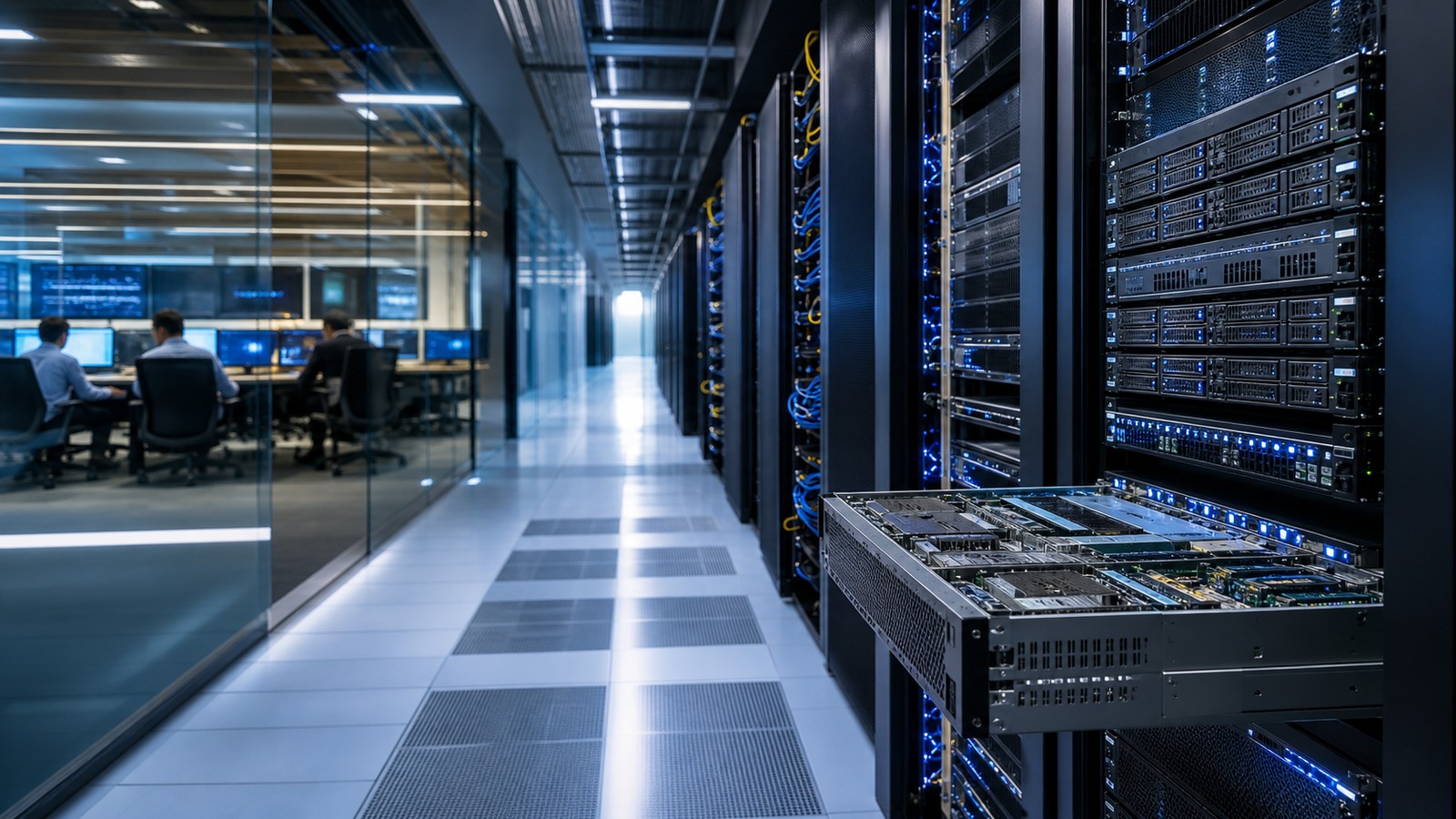
Bare metal removes that layer. You rent the entire physical server, single tenant, with no hypervisor scheduling other customers beside you. Your application’s system calls hit the hardware more directly, and you are free to shape the machine to your workload, from BIOS toggles to storage layout to how interrupts are handled. The result is not simply more performance in the abstract, but tighter control over how that performance is delivered, and fewer sources of variability that can surprise you at the worst possible time.
Isolation follows naturally from these architectures. Cloud servers rely on strong software boundaries to keep tenants separate. Modern hypervisors are remarkably secure, but the shared nature of the stack means you inherit a slice of systemic risk and must accept that some controls live outside your domain. Bare metal flips that. You get physical isolation by default, a narrower attack surface from co-residency, and straightforward mental models for network segmentation and data flows. It is not inherently more secure—poorly managed bare metal can be dangerous—but it is easier to reason about because fewer invisible factors are in play.
Performance Without Surprises: Where Milliseconds Become Outcomes
If you care about predictability under load, bare metal is compelling. Because nothing else is contending for those CPU cores, turbo behavior and cache locality are consistent. You can pin processes to specific cores and sockets, align memory allocations with NUMA topology, and trust that your hot paths won’t compete with a neighbor’s batch job. Applications with large in-memory working sets, real-time analytics, or latency-sensitive matching logic often see not just higher throughput but tighter p95 and p99 latencies. The tail is where user experiences degrade and SLAs are broken; taming the tail is a bare metal specialty.
Storage is the other headline. Direct access to local NVMe devices allows deep tuning of queue depths, I/O schedulers, and write amplification strategies. Databases that must flush synchronously, time-series engines that pound the disk, and search indices that rebuild and compact benefit from the absence of virtualization layers translating I/O into opaque operations. The machine does exactly what you ask, no more and no less, and that predictability compounds as data volumes grow.
Networking follows the same pattern. With dedicated NICs and features like SR-IOV, packets can bypass virtualization overhead and reach your application faster and with less jitter. Low-latency trading, multiplayer gaming back ends, and streaming systems value that determinism. And if your workloads need specialized accelerators—GPUs, FPGAs, SmartNICs—bare metal often simplifies device passthrough and driver control. You are not negotiating for shared accelerator time; you own the card during its lifetime on your server.
Cloud servers are no slouch. Top-tier providers deliver impressive performance and increasingly offer instances with local NVMe, high clock CPUs, and dedicated network bandwidth. For many general-purpose applications, the performance difference may not justify the operational effort of physical infrastructure. The practical question is not which is faster on a benchmark; it is whether your business outcomes rely on headroom and predictability that only dedicated hardware delivers.
Elasticity and the Cloud Multiplier: Time-to-Value at Its Best
Where cloud servers shine is elasticity and ecosystem. Need fifty new application servers for a seasonal campaign? A few lines of infrastructure as code and your fleet expands across regions. Want a global content delivery footprint, managed databases with automatic backups, or a message queue that scales to millions of messages per second? The cloud marketplace has a service for nearly every common problem, glued together by identity, logging, and monitoring primitives that remove hours of toil from every project.
This elasticity is not only about handling demand spikes. It is a force multiplier for teams. When environments are ephemeral and consistent, developers experiment more. When staging mirrors production with a flag flip instead of a week of procurement, features move faster. When autoscaling policies respond to real-time load, you stop guessing at capacity. Cloud servers make infrastructure feel like software, and that shift in posture—provision, test, destroy, repeat—becomes a cultural accelerant.
Bare metal has come a long way on this front. Many providers now offer API-driven provisioning, fast imaging, and integration with tools like Terraform and Ansible. You can build golden images with Packer, boot via iPXE into automated installers, and converge machines into roles with your favorite configuration management. But true elasticity is still bounded by the reality that physical machines exist in finite quantities and cannot be conjured in arbitrary shapes on demand. If your usage pattern resembles a heartbeat monitor, cloud servers will keep pace with less friction.
The Money Model: Cost, Predictability, and the Hidden Line Items
The cost conversation is often where decisions stall because it is easy to compare sticker prices and miss the bigger picture. Cloud servers charge by the hour or second, with discount programs for commitments. They convert everything into operating expense, provide clean metering, and reduce financial friction early in a project’s life. They also introduce variable costs that can grow in surprising ways, especially around network egress, inter-region traffic, managed service premiums, and idle resources left on by accident.
Bare metal flips the economics. You typically pay a fixed monthly or term-based rate for a known server spec. There is no hypervisor tax and no noisy neighbor penalty, so you get more work per dollar at high utilization. For steady-state, resource-intensive workloads such as databases, caches, render farms, and analytics engines that stay hot all month, bare metal can be materially cheaper at the same performance level. Costs are also more predictable, which simplifies budgeting and reduces the risk of billing shocks that appear after a lively launch weekend.
The nuance lives in utilization and labor. A cloud server you only need twenty percent of the time is a perfect candidate for on-demand or scheduled usage. A bare metal server you only drive on weekends is an expensive garage ornament. On the labor side, cloud servers reduce operational overhead by offloading undifferentiated heavy lifting to managed services. Bare metal invites engineering investment in imaging, monitoring, firmware management, and remote hands procedures. Those investments pay off in control and performance, but they do belong on the cost sheet.
The healthiest analysis treats cost as a function of outcomes. Tie every dollar to the throughput, latency, reliability targets, and development velocity it enables. Then layer in the overhead items that are easy to forget at the whiteboard, like data transfer between availability zones, snapshot storage, support plans, or the impact of slower feedback loops on your team’s cadence. The cheapest path is rarely the one that ignores human time.
Security, Compliance, and Control: Choosing Your Responsibility Boundary
Security posture follows the isolation story. In cloud environments, you operate within a shared responsibility model. The provider secures the infrastructure, and you secure your applications and data. This arrangement is efficient at scale and backed by deep investment in platform security, but it imposes limits on visibility and control. You rely on provider attestations and must adapt to their patch schedules, their hardware refresh cycles, and their multi-tenant designs.
Bare metal pushes the boundary toward you. Single tenancy eliminates an entire class of multi-tenant risks and can simplify compliance narratives for auditors who want crisp lines around data residency, adjacent tenants, and privileged access pathways. You choose the operating system hardening checklist, control when firmware is updated, and decide how management interfaces like IPMI or Redfish are exposed and monitored. That control is powerful, and it is a responsibility. Misconfigurations, unpatched kernels, and exposed out-of-band interfaces are frequent culprits in incidents on physical fleets.
Regulated industries often blend the two. Sensitive data stores may live on bare metal in specific facilities to satisfy residency and sovereignty requirements, while application tiers and analytics jobs enjoy the cloud’s elasticity in nearby regions. Hardware security modules, disk encryption with TPM-backed keys, strict network segmentation, and least-privilege access policies can be implemented in both worlds. The difference is that on bare metal you define the entire chain yourself, and in cloud you assemble it from primitives the provider exposes.
Day Two Reality: Operability, Tooling, and the Work Your Team Actually Does
Day one is provisioning; day two is everything after. In cloud worlds, much of day two is mediated by the platform. Instances reboot onto new hardware if a host goes unhealthy. Managed databases patch and fail over with graceful automation. Telemetry pipelines integrate neatly with platform logging and tracing. When hardware fails, it is someone else’s ticket queue, and you are shielded from its details. The trade-off is that your ability to influence behavior below the instance is limited, and complex problems may require provider support cycles.
On bare metal, day two is very much your day. The good news is you can make it great. Treat servers as cattle, not pets, and invest early in idempotent provisioning. Standardize a small set of SKUs, wire racks with repeatable network topologies, and keep management interfaces on isolated networks. Ship logs, metrics, and traces from the first boot and watch the hardware too, from SMART data and PCIe error counts to temperature and fan curves. Stage firmware updates in canaries, test them like code, and schedule maintenance windows with clear runbooks. Establish a crisp remote-hands process with your provider for when a disk fails at 3 a.m. and design your systems so that such failures are non-events.
Kubernetes and container orchestration straddle both worlds. Many teams run clusters on cloud servers for elasticity, while others run Kubernetes on bare metal to give containers direct access to GPUs and NVMe and to squeeze out the last percentage points of latency. Either way, the orchestration layer wants good primitives: reliable networking, clear failure domains, and predictable storage. If you give your platform these ingredients, day two feels dramatically less dramatic.
The Hybrid Sweet Spot: Patterns That Combine the Best of Both
For many organizations, the right answer is not either-or. It is a thoughtfully designed hybrid that uses each world for what it does best. A common pattern places stateful systems on bare metal for performance and cost predictability, then stretches stateless tiers across cloud servers that scale elastically with traffic. Another pattern uses cloud regions for global reach while anchoring data-intensive analytics or machine learning training on dedicated hardware where GPUs are pinned to the job for weeks.
Data gravity influences these choices. Pulling terabytes across regions is expensive and slow, so it pays to plant heavy data where it will live most of its life and bring compute to the data as needed. Edge footprints also complicate the picture. If you must serve users with single-digit millisecond latency from specific cities, bare metal in edge colocation facilities can be paired with cloud back ends that coordinate state and handle management complexity.
Connectivity is the glue. Private interconnects, VPNs, or SD-WAN keep traffic secure and predictable between your bare metal and cloud estates. Identity and access management should span both so that operators and services follow the same least-privilege discipline regardless of where they run. Observability should be unified so you see one coherent story when a request travels from a cloud front end to a bare-metal database and back again. When the seams are well stitched, hybrid feels less like two worlds and more like one platform with multiple neighborhoods.
Choosing with Confidence: A Practical Evaluation You Can Run This Month
The most reliable way to decide is to test your own workloads instead of trusting generic benchmarks or vendor narratives. Pick a representative slice of your system: a read-heavy service with strict latency SLOs, a write-heavy database with frequent compactions, a GPU training job with large checkpoints, or a queue that oscillates between quiet and frantic. Deploy it on both cloud servers and bare metal with production-like data and realistic traffic patterns. Measure the metrics that actually matter to you: tail latency under sustained load, recovery time when a node fails, cost per unit of useful work, and the cognitive load your team experiences during operations.
Keep the bake-off honest by investing in quality on both sides. Cloud servers deserve proper instance types, placement groups if relevant, and tuned storage. Bare metal deserves current firmware, well-chosen filesystems, and network settings that match your traffic profile. Run failure drills in both. Yank a cable, kill a process, or simulate a host failure and observe not only how the system reacts but how your runbooks and alerts guide the humans in the loop. The best platform is the one that lets your team recover gracefully, not just the one that performs beautifully when nothing goes wrong.
Once you have data, plot a portfolio. Some services will clearly belong on bare metal, others on cloud, and some will be ambivalent. Resist the urge to force uniformity for its own sake. Standardize where it reduces friction and cost, and allow exceptions where they buy you disproportionate advantages. Revisit the map quarterly. Traffic shifts, product priorities change, and both the cloud and bare metal markets evolve quickly with new instance types, new accelerators, and better tooling.
Above all, decide with intention. Bare metal servers and cloud servers are powerful tools, and each can make your applications fast, reliable, and economical when used in the setting that suits them best. When your business depends on unwavering performance and you are willing to own the operating model, bare metal pays dividends in consistency and cost. When your success relies on rapid iteration, global reach, and services you do not want to run yourself, cloud servers are unmatched. And when you want both, a well-engineered hybrid turns the choice into a spectrum instead of a cliff. Pick your spot, measure relentlessly, and let real outcomes—not assumptions—guide the road ahead.
Top 10 Best Bare Metal Server Reviews
Explore Hosting Street’s Top 10 Best Bare Metal Server Reviews! Dive into our comprehensive analysis of the leading hosting services, complete with a detailed side-by-side comparison chart to help you choose the perfect hosting for your website.